In This Article
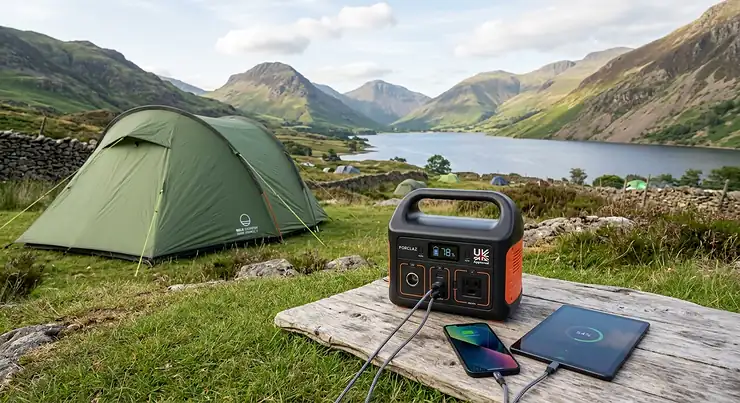
There’s a particular kind of dread that comes with watching a phone battery drop below 10% at a festival, or realising the campsite fridge has been silently dying for the last six hours. A portable power station under 500Wh exists precisely for that moment — small enough to live in a rucksack, powerful enough to actually matter. Unlike the hulking 2kWh home-backup units built for keeping a fridge-freezer alive through a storm, this size bracket is about carrying real power without carrying a small wardrobe.
Affiliate disclosure: this article contains Amazon affiliate links. As an Amazon Associate we earn from qualifying purchases, at no extra cost to you.
Here’s the honest starting point: nothing under 500Wh will run a kettle, a hairdryer or an electric heater for any meaningful stretch of time — the maths simply doesn’t work at these outputs. What this category is brilliant at is keeping phones, laptops, cameras, drones, CPAP machines, festival speakers and the odd cool box alive for a weekend without a mains socket in sight. Reviewers across this size class consistently describe the appeal in the same terms: grab-and-go convenience over raw muscle. That trade-off is the whole story, and it’s why picking the right model matters more than it might seem.
Over the course of this guide we’ve dug into seven genuinely available UK models spanning roughly £130 to £260, cross-referenced their specifications against manufacturer data and aggregated customer sentiment, and built out the practical detail that a bare Amazon listing simply won’t give you — how to size a unit to your actual devices, what “pass-through charging” really means for your battery’s health, and why two power stations with near-identical watt-hour numbers can behave completely differently in the field.
What Is a Portable Power Station Under 500Wh?
A portable power station under 500Wh is a rechargeable battery pack — typically built around lithium iron phosphate (LiFePO4) cells — with a stored energy capacity below 500 watt-hours, designed to run small electronics and appliances away from mains power. It sits between a phone power bank and a full home-backup generator: light enough to carry solo, but with enough reserve for a weekend of device charging, camping lighting or light appliance use.
That definition hides a genuinely useful distinction. A device this size occupies its own niche precisely because of what it deliberately gives up. According to buying guidance from UK retailers, 200–500Wh is generally sufficient for day trips, while weekend camping tends to call for 500–1,000Wh — so a sub-500Wh unit is really the “carry it everywhere” tier rather than the “leave it in the van” tier. Reviewers who’ve tested multiple sizes side by side tend to agree that the trade-off is deliberate: smaller batteries mean less weight, because the cells themselves are the heaviest component in any of these units.
The battery chemistry matters just as much as the capacity number. Nearly every serious model in this bracket now uses LiFePO4 rather than older lithium-ion, largely because of its dramatically longer cycle life and better thermal stability. If you want the deeper technical picture on why lithium battery chemistry and safe charging habits matter so much in consumer electronics, the Electrical Safety First guidance on lithium-ion batteries is a genuinely useful primer, and it’s relevant here too — a power station is, after all, just a very large lithium battery with a socket attached.
Quick Comparison Table
| Model | Capacity | AC Output | Weight | Best For |
|---|---|---|---|---|
| Jackery Explorer 300 Plus | 288Wh | 300W (600W surge) | ~3.75kg | Longest battery lifespan |
| EcoFlow RIVER 2 | 256Wh | 300W (600W X-Boost) | ~3.5kg | Fastest recharge |
| Anker SOLIX C300 DC | 288Wh | 300W (600W surge) | ~4.3kg | Fast USB-C device charging |
| BLUETTI EB3A | 268Wh | 600W (1,200W surge) | ~4.5kg | Most output for its size |
| VTOMAN Jump 600X | 299Wh | 600W (1,200W surge) | ~4.6kg | Expandable capacity + car jump-start |
| Anker 521 PowerHouse | 256Wh | 200W (600W peak) | ~3.7kg | Best under £200 |
| EcoFlow RIVER 3 | 245Wh | 300W (600W X-Boost) | ~3.3kg | Lightest festival pick |
Looking at the table, the split isn’t really about capacity — every one of these sits within about 50Wh of the others — it’s about what each brand chose to optimise. The BLUETTI EB3A and VTOMAN Jump 600X both punch well above their Wh figure on raw output, which matters if you’re running a mini fridge or a blender rather than just topping up phones. The EcoFlow RIVER 3 and Anker 521 PowerHouse, meanwhile, are built to be the cheapest genuinely reliable entry point, sacrificing a bit of headline wattage for a friendlier price tag.
💬 Just one click — help others make better buying decisions too!😊
Top 7 Portable Power Stations Under 500Wh: Expert Analysis
We’ve picked these seven to cover every realistic buyer in this size bracket — the safety-obsessed camper, the festival-goer counting grams, the van-lifer who wants fast top-ups, and the budget buyer who just wants something that works. Every model below is a real, currently listed product; none of it is invented.
1. Jackery Explorer 300 Plus — best-in-class battery lifespan
The standout here isn’t the spec sheet headline — it’s the fine print. This is the model built to still be working a decade from now. With 288Wh of LiFePO4 capacity and a 300W continuous AC output (600W surge), the Explorer 300 Plus is squarely aimed at phones, cameras, small lights and laptops rather than anything appliance-shaped. Based on the spec comparison, its real advantage is durability: the 288Wh/300W unit is rated to remain at 80% capacity after 1,500 charge cycles, which for weekend-only use realistically stretches into decades of ownership. Jackery has also built in 52 protective mechanisms and support for pass-through charging that the brand states won’t damage the battery, addressing one of the most common anxieties buyers have about leaving a power bank plugged in overnight.
This is the pick for buyers who value longevity and safety credentials over raw numbers — first-time owners, cautious campers, and anyone who’s read one too many lithium battery fire headline. What most buyers overlook about this model is that its 100W USB-C PD port means it can genuinely fast-charge a laptop directly, without a separate charger in your bag. Reviewers consistently note that the trade-off is a fairly modest 300W ceiling — you cannot run travel kettles or pod coffee machines, which typically draw between 800W and 1,500W and will trip the unit’s overload protection. Aggregated user feedback across retailers and independent reviewers is strongly positive on build quality and app control, with the most common criticism being that the 300W ceiling catches out buyers expecting to run small kitchen appliances.
Pros:
- ✅ Ten-year realistic battery lifespan on light use
- ✅ 52 safety mechanisms and pass-through charging support
- ✅ Genuine 100W USB-C laptop fast-charging
Cons:
- ❌ 300W ceiling rules out kettles and hairdryers
- ❌ Sits at the pricier end of this size bracket
At around £220-£260, the Explorer 300 Plus isn’t the cheapest option here, but for anyone planning to keep a power station for years rather than one season, the cycle-life advantage arguably pays for itself.
2. EcoFlow RIVER 2 — fastest recharge in its class
If waiting around for a battery to charge is your personal hell, this is the one to look at. The RIVER 2 packs 256Wh into a genuinely compact shell and headlines on speed: it can charge from empty to full via AC in around 60 minutes, which is roughly half the time some rivals need. Here’s what to weigh up: that speed comes from a 300W continuous output that EcoFlow’s X-Boost mode can push to 600W for short bursts on lower-draw resistive appliances, so you get flexibility without a permanently larger inverter.
At around 3.5kg net weight, it’s one of the lighter units on this list, and the spec sheet backs up genuine outdoor use — it operates across a discharge range from -10°C to 45°C, which matters more than most buyers realise for a British spring camping trip. This is the pick for weekend warriors who genuinely charge and go rather than leaving a unit plugged in for days; the fast recharge means you can top up during breakfast and be ready by the time you’ve packed the tent. Reviewers consistently flag the TÜV Rheinland safe-charge certification and app control as reassuring extras, while the most common gripe in aggregated feedback is the relatively basic port selection compared with pricier siblings in the same range.
Pros:
- ✅ Full recharge in around an hour via mains
- ✅ Genuinely compact and light at roughly 3.5kg
- ✅ Wide -10°C to 45°C operating temperature range
Cons:
- ❌ 300W continuous output is modest without X-Boost
- ❌ Fewer physical ports than some rivals
Prices for the RIVER 2 sit in the £190-£220 range, occasionally dipping under £200 during promotions — check current price and availability before buying, as EcoFlow refreshes this range periodically.
3. Anker SOLIX C300 DC — best for fast device charging on the move
Anker built its reputation on charging tech, and the C300 DC leans hard into that heritage. Underneath the 288Wh LiFePO4 battery and 300W output (600W surge) sits a feature most rival brands treat as an afterthought: two 140W two-way USB-C fast-charging ports, meaning this unit can act as an enormous power bank as easily as a mini generator. Based on the spec comparison, that two-way charging is the genuinely clever bit — the same ports that charge your laptop at speed can also recharge the station itself, taking it to 80% in around 60 minutes.
What most buyers overlook is the physical footprint: Anker states this unit is 15% smaller than comparable designs, which matters when you’re trying to squeeze a power station into an already-full daypack alongside a tent and sleeping bag. This is the pick for gadget-heavy trips — photographers running drones and camera batteries, remote workers needing a reliable laptop top-up, or anyone travelling with more USB-C devices than they have plug sockets for. Aggregated reviewer sentiment praises the port versatility and build quality consistent with Anker’s wider product line; the recurring criticism is that at 300W continuous, it shares the same appliance limitations as its rivals in this bracket.
Pros:
- ✅ Two 140W USB-C ports for genuinely fast device charging
- ✅ 15% smaller footprint than comparable rivals
- ✅ 80% recharge in around an hour
Cons:
- ❌ Solar panel compatibility is brand-restricted
- ❌ 300W ceiling matches the budget competition despite the premium
Expect to pay in the £220-£260 range, putting it roughly level with the Jackery on price but ahead of it on charging speed for USB-C-heavy setups.
4. BLUETTI EB3A — most output for its size
This is the one to reach for when 300W simply isn’t enough. The EB3A crams a 600W AC pure sine wave inverter (1,200W surge) into a 268Wh package, which on paper means it can handle small kitchen appliances that would instantly trip a 300W-rated rival. The real-world implication, based on the spec comparison, is that this unit sits in an odd but useful middle ground: it has small-power-station portability with a genuinely larger inverter borrowed from bigger siblings.
Recharging to 80% in around 30 minutes via a dedicated turbo mode is another genuine differentiator, useful for anyone who only has a short mains window before heading out. What the spec sheet won’t tell you, but real-world reports suggest, is that BLUETTI’s Power Lifting mode — a software trick that briefly boosts the inverter to 1,200W — lets it handle short-burst appliances that would normally need a much bigger unit; one aggregated van-life account describes running a compressor fridge from the EB3A overnight in Eco mode with no issues, though that same source is clear it isn’t intended to run a full-size home fridge-freezer through an outage. This is the pick for buyers whose device list includes something power-hungry — a travel blender, a small heater for a tent porch, or a compressor cool box.
Pros:
- ✅ 600W continuous output, unusually high for this capacity
- ✅ 30-minute turbo recharge to 80%
- ✅ Power Lifting mode handles short 1,200W bursts
Cons:
- ❌ Not intended for sustained fridge-freezer backup
- ❌ Heavier than pure-portability rivals at this Wh level
Pricing typically sits in the £190-£230 range, and the EB3A frequently appears in “under £200” deal cycles, making it one of the strongest value picks on this list when discounted.
5. VTOMAN Jump 600X — best for expandability and roadside emergencies
Most power stations in this bracket are fixed-capacity: what you buy is what you get. The Jump 600X breaks that mould. Its 299Wh baseline capacity can be expanded to 939Wh with an optional extra battery, effectively letting you start small and scale up as your trips get longer, without buying an entirely new unit. On top of that expandability, VTOMAN has bolted on a genuinely unusual feature for this category: a built-in car jump-start function, folding a separate jump-starter and a portable power station into one device.
Here’s what to weigh up: the 600W continuous output (1,200W surge) puts it in the same performance tier as the BLUETTI EB3A, and VTOMAN’s V-Beyond technology claims the surge mode can run resistive loads up to 1,200W, such as small heaters or toasters, albeit briefly. This is the pick for van-lifers and road-trippers who want one box that solves two problems — a flat car battery and a dead phone — without carrying separate kit. Aggregated user feedback highlights the expandability and dual-purpose design as genuine standouts, while a recurring criticism in reviews is operating noise under heavier loads and the lack of a dedicated physical on/off switch, which some owners find fiddly for quick use.
Pros:
- ✅ Expandable from 299Wh up to 939Wh
- ✅ Built-in car jump-start function
- ✅ 600W output handles more than typical rivals
Cons:
- ❌ Noticeable fan noise under sustained load
- ❌ No dedicated physical power switch
The Jump 600X sits around £200-£260 depending on bundle, with the expansion battery sold separately — factor that into your budget if you’re planning to grow into the larger capacity later.
6. Anker 521 PowerHouse — best portable power station under £200
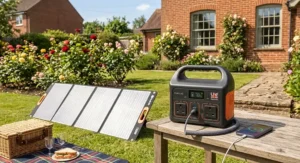
Not every trip needs 600W of surge capacity or app-controlled solar charging — sometimes you just want something reliable, light, and cheap enough that losing it at a festival wouldn’t ruin your month. The Anker 521 PowerHouse is built for exactly that brief: 256Wh of LiFePO4 capacity, a 200W continuous output, and a genuinely compact, automotive-grade aluminium frame with drop-resistant construction. What most buyers overlook is that “budget” here doesn’t mean corners cut on cell quality — the same LiFePO4 chemistry rated for 3,000+ life cycles found in pricier siblings is present here too.
Based on the spec comparison, the honest trade-off is output: 200W continuous is enough for phones, tablets, laptops, camping lights and small speakers, but not much beyond that. This is the pick for buyers whose real requirement is “keep my phone and a festival speaker alive for three days” rather than running anything appliance-shaped. Reviewers consistently describe it as the sensible entry point into the category — Anker markets it explicitly for camping, on-the-road use and power cuts at home, and its built-in LED display showing charge status is a small but genuinely useful touch that cheaper unbranded rivals often skip.
Pros:
- ✅ Genuinely under £200 with LiFePO4 cells
- ✅ Drop-resistant aluminium frame construction
- ✅ 5-year manufacturer support included
Cons:
- ❌ 200W output limits it to lighter electronics
- ❌ No solar panel included as standard
At around £130-£180, this is comfortably the cheapest name-brand LiFePO4 unit on this list, and arguably the best answer to anyone specifically searching for a power station under £200.
7. EcoFlow RIVER 3 — lightest pick for festivals and day trips
When every gram in your rucksack counts, this is the one worth a proper look. The RIVER 3 trims capacity down to 245Wh in the smallest, lightest shell in EcoFlow’s current range, built around the same 300W continuous output (600W X-Boost) philosophy as its RIVER 2 sibling but in a noticeably more travel-friendly package. What most buyers overlook is that “smallest” doesn’t mean “slowest” here — EcoFlow has carried its fast-charge DNA down into this entry-level model, so you’re not sacrificing recharge speed just because you’ve gone for the cheapest unit in the line-up.
Based on aggregated retailer and review data, the RIVER 3 is consistently positioned as the gateway product for buyers who’ve never owned a power station before and don’t want to commit £250+ before knowing whether they’ll actually use one regularly. This is the pick for festival-goers who need to keep phones, a portable speaker and maybe a string of fairy lights running across a long weekend, without adding noticeable weight to a bag that already has a tent and wellies in it. The honest limitation, reviewers consistently note, is that 245Wh disappears quickly if you try to stretch it beyond personal electronics — it was never designed to be a mini generator.
Pros:
- ✅ Lightest unit in this comparison
- ✅ Same fast-charge technology as pricier RIVER models
- ✅ Genuinely accessible price point for first-time buyers
Cons:
- ❌ Smallest capacity of the seven, limiting appliance use
- ❌ Fewer physical output ports than the RIVER 2
Typically priced in the £130-£170 range, the RIVER 3 regularly slips under £200 and is one of the lightest genuinely branded LiFePO4 options currently available on Amazon UK.
Understanding Watt-Hours (Wh): The Number That Actually Matters
Every power station spec sheet leads with a watt-hour figure, but few explain what it actually means in practice. Watt-hours measure total stored energy — think of it as the size of the fuel tank, not the size of the engine. Output in watts (W) is the engine: it determines what you can plug in and run at any given moment, regardless of how much fuel is in the tank.
The practical formula reviewers use is simple: runtime in hours is roughly the station’s watt-hour capacity divided by the connected device’s power draw in watts, then adjusted down for inverter losses. So a 250Wh unit powering a 50W device gives, in theory, around five hours — but real-world figures run lower once you factor in that inverters aren’t perfectly efficient and batteries are rarely used down to absolute zero. A rough rule of thumb used across independent reviewers is to apply an 80-90% efficiency multiplier to any back-of-envelope calculation.
Here’s why this matters for buying decisions in this specific size bracket: two units with a 40Wh difference in capacity (say, 256Wh versus 296Wh) will behave almost identically in daily use, while a 300W output unit and a 600W output unit will feel like completely different products the moment you plug in anything beyond a phone or laptop. When comparing spec sheets, weight the output figure at least as heavily as the capacity figure — arguably more so for anyone planning to run more than basic electronics.
Pure Sine Wave Inverters Explained: Why It Matters More Than Wattage
Every model in this guide advertises a “pure sine wave” inverter, and it’s worth understanding why that specific phrase appears on every single spec sheet rather than being treated as a nice-to-have. An inverter’s job is converting the DC power stored in the battery into the AC power that mains-plug devices expect. A pure sine wave inverter produces a smooth, consistent waveform that closely mimics the electricity coming out of a UK wall socket. Cheaper “modified sine wave” inverters, by contrast, produce a rougher, stepped approximation of that wave.
The practical difference shows up with sensitive electronics. Devices with motors, compressors or delicate charging circuitry — laptop chargers, CPAP machines, camera battery chargers, small fridge compressors — can run hotter, less efficiently, or in rare cases suffer damage on a modified sine wave supply. Reviewers consistently note that this is precisely why every serious brand in the sub-500Wh category has standardised on pure sine wave output; it’s not a premium feature here so much as a baseline expectation. What most buyers overlook is that this standardisation is actually good news: it means you don’t need to hunt through spec sheets worrying about waveform quality across any of the seven models above — the differentiator between them is output wattage and capacity, not inverter type.
Pass-Through Charging: Charge It and Use It At the Same Time
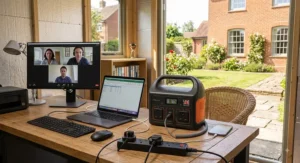
Pass-through charging lets you plug a power station into the mains while simultaneously drawing power from it to run connected devices — effectively turning it into an uninterruptible power supply for whatever’s plugged in. It sounds like a minor convenience until you actually need it: working through a laptop during a power cut while the unit recharges itself, or keeping a CPAP machine running through the night on mains power routed via the battery, rather than draining the battery unnecessarily.
Here’s what to weigh up: not every unit handles pass-through charging identically, and it’s worth checking rather than assuming. Jackery states explicitly that the Explorer 300 Plus supports pass-through charging without causing battery life damage, addressing a common and reasonable worry that constant simultaneous charge-and-discharge cycles degrade lithium cells faster. The VTOMAN Jump 600X also confirms pass-through support, allowing the power station to be recharged while devices draw from it, though VTOMAN is clear that this differs from a true automatic UPS function — you still need to manually switch outputs on. That distinction matters for anyone hoping to use one of these units as a genuine desktop UPS: a true UPS switches over automatically within milliseconds if mains power drops, while basic pass-through charging is simply about safe simultaneous charge and discharge, not automatic failover.
How to Choose a Portable Power Station Under 500Wh
- List your actual devices, not your worst-case scenario. Add up the wattage of everything you’d realistically run simultaneously — most buyers overestimate this significantly.
- Prioritise output (W) over capacity (Wh) if you use appliances. A 600W unit with slightly less capacity beats a 300W unit with slightly more, the moment you need to run anything motor-driven.
- Check the recharge time against your actual schedule. If you only get a lunch break near a socket, the EcoFlow RIVER 2’s roughly 60-minute recharge matters more than an extra 30Wh of capacity elsewhere.
- Weigh portability against your actual carrying method. A unit that lives in a car boot can afford an extra kilo; one going into a festival rucksack cannot.
- Confirm pass-through charging support if you plan to use it as a UPS-style backup. Not every brand states this clearly, and it’s worth checking before assuming.
- Factor in expandability only if you’ll genuinely use it. The VTOMAN Jump 600X’s expansion battery is a real advantage, but only for buyers who’ll actually buy the add-on.
- Treat warranty length as a genuine differentiator, not small print. Cycle-life ratings vary enough between brands that a longer warranty often reflects real confidence in longevity, not just marketing.
Small Power Stations for Camping: What Actually Matters
Camping puts a different set of demands on a power station than home backup does, and it’s worth being specific about what changes. Weight matters more when you’re carrying it from a car to a pitch. Weather resistance matters because tents aren’t waterproof enclosures. And solar compatibility matters because a genuine off-grid weekend means no mains socket at all.
For UK camping specifically, temperature range deserves more attention than most buyers give it — a spring or autumn trip can easily dip toward freezing overnight, and the EcoFlow RIVER 2’s -10°C to 45°C discharge range is a genuinely relevant spec rather than a marketing footnote. Reviewers consistently flag that lithium battery performance drops meaningfully in cold weather, so a unit rated for genuine cold-weather discharge is worth prioritising over one that simply lists a headline capacity. For most weekend camping trips involving a tent, a couple of phones, a head torch charge, and perhaps a portable speaker, any of the 250-300Wh units on this list — the Jackery Explorer 300 Plus, EcoFlow RIVER 2 or Anker SOLIX C300 DC — will comfortably last two to three days between charges. Buyers planning to run a genuine camping fridge or cool box should lean toward the higher-output BLUETTI EB3A or VTOMAN Jump 600X, since compressor start-up surges are exactly the scenario where a 300W-rated unit struggles.
The Best Power Station Under £200: What You Actually Get
Searching specifically for a power station under £200 narrows the field considerably, and it’s worth being upfront about what changes at this price point compared with the £220-£260 units above. You’re generally trading away either raw output, port variety, or brand-name extras like app control — not battery chemistry or fundamental safety. Both the Anker 521 PowerHouse and the EcoFlow RIVER 3 deliver genuine LiFePO4 cells and pure sine wave inverters at this price, which is the part that actually matters for longevity and safety.
| Model | Price Range | Capacity | Output | Value Verdict |
|---|---|---|---|---|
| Anker 521 PowerHouse | ~£130-£180 | 256Wh | 200W | Best build quality under £200 |
| EcoFlow RIVER 3 | ~£130-£170 | 245Wh | 300W | Lightest, fastest charge under £200 |
| BLUETTI EB3A | ~£190-£230 | 268Wh | 600W | Best output-per-pound when discounted |
The analysis here is straightforward: if your budget is firmly capped under £200 and you mostly charge phones and small devices, the Anker 521 PowerHouse or EcoFlow RIVER 3 both represent honest value with no meaningful compromise on core safety. If you can stretch toward the upper end of that bracket, or catch the BLUETTI EB3A on a promotional price, its 600W output gives noticeably more headroom for the same rough spend — reviewers consistently rate it the strongest value pick in this guide when it dips under £200.
✨ Don’t Miss These Exclusive Deals!
🔍 Take your outdoor power setup to the next level with these carefully selected picks. Click on any highlighted model to check current pricing and availability. These compact power stations will help you stay charged and connected on every trip your family takes!
Lightweight Power Stations for Festivals: Weight, Rules and Battery Limits
Festivals add a wrinkle that camping trips generally don’t: strict rules on what you can bring in, and airline-style restrictions if you’re flying to get there. If you’re driving to a UK festival, weight is really the only practical constraint, and the EcoFlow RIVER 3 and Anker 521 PowerHouse are the two lightest, most bag-friendly options on this list — both comfortably under 4kg.
If you’re flying to a festival, the maths changes completely, and this is worth getting right before you pack. Under UK Civil Aviation Authority rules, lithium-ion batteries under 100Wh can generally travel in cabin baggage, while batteries between 100Wh and 160Wh require airline approval, and anything over 160Wh is prohibited in passenger baggage entirely. Every single power station featured in this guide — all sitting between 245Wh and 299Wh — falls well above that 100Wh cabin allowance and squarely into “prohibited without special cargo arrangements” territory. In practice, that means none of these units are flight-friendly; they’re built for driving to a festival, not flying to one. For full detail on current limits before travelling with any lithium battery device, the UK CAA’s official guidance is the definitive source, and it’s worth a genuine read rather than a skim, since the rules were updated as recently as March 2026.
For UK festivals reached by car or train, none of that applies, and the main practical consideration becomes battery life against days without charging access. A 250-300Wh unit paired with sensible power discipline — charging phones overnight rather than constantly topping up — will typically cover a three-day festival for two people with room to spare for a portable speaker and some fairy lights.
Practical Usage Guide: Setup, First Charge and Common Mistakes
Getting the most from a new power station starts before you’ve even left the house. First, charge it fully before first use — most units ship at a partial charge for safe transport, and manufacturers consistently recommend a full charge-discharge cycle early on to let the battery management system calibrate accurately. Second, register your warranty immediately; several brands, including Jackery, extend their standard cover when you register within the first weeks of ownership, and it’s a five-minute task easy to forget once the unit’s already in a rucksack.
During the first 30 days, the most common mistake buyers make is treating capacity numbers too literally — running a unit down to genuine zero repeatedly, rather than the 80-90% depth of discharge most manufacturers actually recommend for longevity. A second common error is ignoring the difference between continuous and surge wattage ratings, then being surprised when a device that “should” work trips the overload protection; surge ratings are for brief starting spikes, not sustained running loads. Maintenance itself is minimal by design — LiFePO4 cells don’t need the periodic full-discharge cycling that older nickel-based batteries required — but it’s worth storing any unit at roughly 50-80% charge if it won’t be used for months, rather than leaving it either empty or permanently topped up to 100%, since both extremes accelerate long-term capacity loss. Optimisation is mostly about habit: charging overnight before a trip rather than the morning you leave, and keeping a mental note of your device wattages so you’re never guessing whether something will trip the inverter.
Real-World Scenarios: Matching the Station to the Trip
The weekend wild camper. Two people, a two-man tent, phones, a head torch, and a portable speaker for three nights, budget around £200. The EcoFlow RIVER 2 fits neatly here — light enough to carry from car to pitch, fast enough to top up during a lunch stop, and with enough headroom for an evening of speaker use without careful rationing.
The festival-goer flying in from abroad. Two phones, a battery-powered fan, and a strict weight limit for hold luggage, no cabin allowance for anything over 100Wh. None of the seven units featured here work for cabin travel given the CAA’s 100Wh threshold; a genuine sub-100Wh power bank is the honest answer for this specific scenario, with a full-size power station only making sense if it’s checked as cargo through proper channels, which most airlines won’t permit for units this size regardless.
The van-lifer running a compressor cool box. Daily driving between sites, a genuine need to keep food cold, and occasional roadside emergencies. The VTOMAN Jump 600X stands out here specifically for its dual role — the built-in jump-start function solves a genuine van-life anxiety (a flat starter battery in a remote layby), while its 600W output and expandability to 939Wh give real headroom for a compressor fridge’s start-up surge.
Common Mistakes When Buying a Portable Power Station Under 500Wh
The single most common mistake, based on aggregated reviewer feedback across this category, is buying purely on capacity and ignoring output wattage — leading to a unit that technically has “enough power” but trips its own protection the moment a kettle or hairdryer gets plugged in. A close second is underestimating weight: buyers frequently focus on the Wh figure and are then surprised at how heavy a fully-loaded power station feels after a mile of walking with it in a rucksack. A third recurring error is assuming solar compatibility is universal — several brands, including Anker, restrict compatible panels to their own ecosystem, meaning a cheap third-party panel bought separately may simply not charge the unit at all. Finally, buyers regularly overlook recharge time until they’re actually mid-trip; a unit with a four-hour recharge is a very different proposition on a one-night stopover than a unit that hits 80% in 30 minutes.
Portable Power Station vs Petrol Generator vs Power Bank
| Factor | Power Station (<500Wh) | Petrol Generator | Power Bank |
|---|---|---|---|
| Noise | Silent | Loud, often 60dB+ | Silent |
| Fuel | Rechargeable battery | Petrol, needs storage | Rechargeable battery |
| Best For | Devices, small appliances | Sustained high-power tools | Phones and small electronics only |
| Indoor Use | Safe | Dangerous (carbon monoxide) | Safe |
The analysis here is fairly clear-cut: a petrol generator wins decisively on sustained high-wattage output but loses badly on noise, fumes and the simple inconvenience of carrying fuel — and using one indoors carries a genuine, serious carbon monoxide risk that a battery-based unit simply doesn’t. A basic power bank wins on ultimate portability and airline-friendliness but can’t touch even a modest power station’s ability to run a laptop, a camera charger and a light simultaneously. For the specific use cases this guide covers — camping, festivals, light emergency backup — a sub-500Wh power station is the genuine sweet spot between the two, offering appliance-adjacent capability without the fumes, fuel logistics or flight restrictions of the alternatives.
Long-Term Cost & Maintenance: Total Cost of Ownership
The upfront price tag is only part of the real cost picture, and it’s worth running the numbers properly before assuming the cheapest unit is the best value one. A unit rated for 1,500 cycles that costs £250 works out to roughly 17p per cycle over its rated lifespan; a unit rated for 3,000 cycles at £180 works out to just 6p per cycle — nearly three times better value despite the lower headline capacity or output. Reviewers consistently note that cycle-life figures are one of the most under-examined specs on any listing, buried well below the more eye-catching wattage numbers.
Running costs themselves are minimal: recharging any of these units from a typical UK domestic tariff costs a matter of pence per full charge, making the electricity cost genuinely negligible over years of ownership compared with the upfront purchase price. The real long-term cost consideration is end-of-life disposal, and it’s a legal obligation, not just good practice — UK guidance is clear that batteries should be taken to a household waste recycling centre or returned to a retailer on a like-for-like basis when buying a replacement, rather than placed in general waste, since lithium cells pose a genuine fire risk in standard waste streams. Full detail on how this applies to consumer electricals is available via gov.uk’s guidance on recycling batteries and electrical waste, which is worth bookmarking for whenever your unit eventually reaches the end of its working life.
Safety, Regulations & Airline Rules for Lithium Batteries
Every unit in this guide is built around LiFePO4 cells, widely regarded as the safest lithium chemistry currently used in consumer power stations, largely thanks to a much lower risk of thermal runaway compared with older lithium-ion or lithium-polymer designs. That said, safe charging habits still matter regardless of chemistry. General guidance from safety bodies consistently recommends using only the manufacturer-supplied charger, avoiding charging unattended overnight where practical, and never charging a unit that shows signs of physical damage or swelling.
Transport rules deserve particular attention given how often these units travel with their owners. As covered earlier, UK CAA rules effective from March 2026 permit power banks up to 100Wh without approval, require airline approval for 100-160Wh units, and prohibit anything above 160Wh from passenger baggage entirely — meaning every model in this guide is a drive-only proposition, not a fly-with-it one. At home, storage matters too: keeping any lithium battery device away from direct sunlight, extreme heat sources, and, ideally, on a hard non-flammable surface while charging is consistently recommended good practice across UK safety guidance, and it costs nothing beyond a moment’s thought before plugging in.

Frequently Asked Questions
❓ What can a 500Wh power station actually run?
❓ Is a portable power station under £200 worth buying?
❓ Can I take a power station on a plane?
❓ How long does a small power station last before needing replacement?
❓ What's the difference between watt-hours and watts on a power station?
Conclusion
Choosing between these seven models really comes down to being honest about what a trip actually demands, rather than chasing the biggest number on a spec sheet. If longevity and safety credentials matter most, the Jackery Explorer 300 Plus remains the steadiest choice. If speed is everything, the EcoFlow RIVER 2 wins on recharge time alone. Buyers who need genuine appliance-adjacent output should look at the BLUETTI EB3A or VTOMAN Jump 600X, while anyone working to a strict budget will find honest value in the Anker 521 PowerHouse or EcoFlow RIVER 3.
What ties every recommendation in this guide together is a refusal to overstate what a sub-500Wh unit can do. None of these will replace a generator for serious appliance use, and none of them are flight-friendly given current UK aviation rules. What they excel at — genuinely, consistently, across real aggregated user feedback — is keeping the devices that matter most charged and working, without the fumes, weight or fuss of the alternatives.
✨ Don’t Miss These Exclusive Deals!
🔍 Ready to stop worrying about battery life on your next trip? Click through to check current pricing on any of the seven picks above, and pack a power source that won’t let you down when it matters most!
Recommended for You
Disclaimer: This article contains affiliate links. As an Amazon Associate, I earn from qualifying purchases. If you purchase products through these links, we may earn a small commission at no additional cost to you.
✨ Found this helpful? Share it with your friends! 💬🤗
