
In This Article
Power station vs generator for home backup is a choice between a silent, fume-free lithium battery unit and a petrol engine that makes electricity on demand. A power station stores energy and delivers it instantly. A generator converts fuel into power for as long as you keep refuelling it.
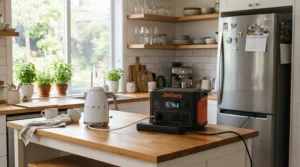
Picture the scene. It’s 6pm in January, a storm has clipped a cable somewhere up the lane, and your house has gone from cosy to cave in half a second. The router is dead, the boiler is sulking and the fridge-freezer has started its slow countdown. Would you rather have a lithium box that hums into life at the flick of a switch, or a petrol engine you must drag outside and pull-start in the rain?
The honest answer is “it depends”, but not in the annoying way. It depends on three things you can measure: how long your typical cut lasts, what you genuinely need to keep running, and whether you can place a combustion engine safely outdoors. Most cuts are short. The Energy Networks Association estimates food stays safe for around four hours in the fridge and roughly 24-48 hours in a freezer, depending on how full it is. That tells you how much backup an average evening needs, and how much it doesn’t.
Below I compare seven real options: five power stations and two petrol inverter generators. I judge them on fuel vs battery running cost, outage duration planning and indoor safety. I also look at a power station for off-grid cabin use and a power station for extended power cuts, because that’s where the trade-offs get spicy. Everything here is analysis built from published specifications and UK roundup reviews. I haven’t personally tested any of these units.
Quick Comparison: 7 Backup Options at a Glance
| Product | Type | Capacity / Output | Price Range* | Best For |
|---|---|---|---|---|
| Jackery Explorer 500 v2 | Power station | 512Wh / 500W | Approx. £250-£400 | Wi-Fi, phones, lights |
| Anker SOLIX C1000 | Power station | 1,056Wh / 1,800W | Mid-£400s | Best-value 1kWh cover |
| EcoFlow DELTA 2 | Power station | 1,024Wh / 1,800W (expandable to 3kWh) | Approx. £430-£510 | Essentials that can grow |
| FOSSiBOT F2400 | Power station | 2,048Wh / 4,800W surge | Approx. £900-£1,500 | Overnight fridge cover |
| EcoFlow DELTA Pro 3 | Power station | About 4kWh | Approx. £2,700-£2,900 | Multi-day cover, cabins |
| Honda EU22i | Petrol inverter generator | 1.8kW rated / 2.2kW max, 3.6L tank | Well over £1,000 | Long cuts, easy refuelling |
| Loncin LC2000i | Petrol inverter generator | 1.6kW rated / 1.8kW max, 4.2L tank | Approx. £600-£700 | Budget long-run power |
*Prices vary by retailer and change constantly. These are ranges at the time of research, so check current price.
The table shows a clear pattern. Power stations win on convenience, and the two petrol units win on how long they can keep going once you’ve topped up the tank. If your priority is a quiet evening with Wi-Fi and a warm-ish fridge, the Anker SOLIX C1000 or EcoFlow DELTA 2 covers it at a sensible cost. For cuts that stretch into days, the Honda EU22i and Loncin LC2000i keep going as long as you can find petrol. The FOSSiBOT F2400 and EcoFlow DELTA Pro 3 sit in between, with larger batteries that reach into multi-day territory at a much higher price.
💬 Just one click — help others make better buying decisions too!😊
Top 7 Power Stations and Generators for Home Backup: Expert Analysis
1. Jackery Explorer 500 v2 — lightest cupboard-friendly starter
At 6.4kg, this is the unit you can carry upstairs with one hand while holding a mug of tea in the other.
The spec sheet reads 512Wh of capacity, 500W of continuous pure sine wave output and LiFePO4 cells rated for roughly 4,000 cycles. In practice, that’s enough to keep a router (typically 10-15W), LED lighting and phones alive through most of a night, and a laptop through a working day. The 500W ceiling is the catch. A fridge compressor’s start-up surge is what trips small units, not its running wattage, so this model won’t reliably start one.
Based on the spec comparison, this is a comms-and-light insurance policy rather than a fridge saviour. It suits flats, short-cut areas and anyone wanting a second, portable unit for camping. Rural households facing long storm cuts should look higher up this list.
I couldn’t verify a large, current pool of individual Amazon UK reviews, so treat this as themes from published UK roundups rather than customer quotes. Those roundups describe it as an easy entry point with a quiet fan profile, and flag the lack of pass-through charging and app control.
Pros:
- ✅ Lightest unit here at 6.4kg
- ✅ LiFePO4 cells rated for around 4,000 cycles
- ✅ Pure sine wave output with quiet fan
Cons:
- ❌ 500W ceiling rules out reliable fridge starts
- ❌ No pass-through charging or app connectivity
Price: typically in the £250-£400 range, so check current price. Verdict: superb value for router-and-lights resilience, poor value if a fridge is your goal.
2. Anker SOLIX C1000 — most watt-hours per pound
If the Jackery Explorer 500 v2 is the sensible hatchback, this is the estate car: roughly double the capacity for not much more money.
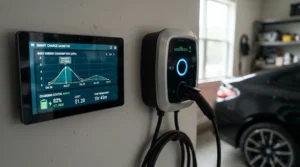
You get 1,056Wh and 1,800W of output, plus a recharge that comparison sites put at under an hour. In real life, 1,056Wh can run a fridge-freezer for a few hours while also feeding the router and lights. Heads up on kettles, though: many UK kettles draw 2.2-3kW, so an 1,800W ceiling may refuse them. Check the label on yours before assuming.
What most buyers overlook is the fast recharge, which matters more than raw capacity in stop-start outages. If power flickers back for twenty minutes, a sub-hour charge lets you claw back a meaningful share of the battery.
One UK comparison site calls it the best-value 1kWh-class pick, at about half the price of Jackery’s equivalent. The same review gives Jackery the edge on app and UK support. I haven’t verified individual Amazon UK ratings, so treat that as roundup sentiment.
Pros:
- ✅ 1,056Wh and 1,800W output at a keen price
- ✅ Recharge in under an hour
- ✅ Quiet, fume-free LiFePO4 design
Cons:
- ❌ Fixed capacity, less expandable than the EcoFlow rival
- ❌ App and UK support rated behind Jackery’s
Price: around the mid-£400s at the time of research, so check current price. Verdict: the value benchmark for short-to-medium cuts.
3. EcoFlow DELTA 2 — the 1kWh unit that can grow
This is the “buy small now, expand later” option. Capacity starts at 1,024Wh and can be expanded up to roughly 3kWh with extra batteries.
Its 1,800W output matches the Anker SOLIX C1000, and a 0-80% charge in about 50 minutes puts it in the same fast-charging league. EcoFlow also markets a boost mode for resistive loads such as kettles, so check the current spec sheet if that matters to you.
Here’s what to weigh. The expansion option turns a one-night solution into a two-night one without replacing the whole system, and you keep the same app and ecosystem. One UK roundup notes a five-year UK warranty and calls it the best pick for most buyers, which counts for a lot when a product may sit in a cupboard for years before you need it.
Reviewers consistently praise the balance of capacity, charging speed and ports. I couldn’t confirm a verified Amazon UK review pool, so read this as roundup sentiment.
Pros:
- ✅ Expandable from 1kWh up to around 3kWh
- ✅ 0-80% charge in about 50 minutes
- ✅ Long UK warranty cited in comparisons
Cons:
- ❌ Usually priced above the Anker rival
- ❌ Extra batteries add real cost and weight
Price: roughly £430-£510 range depending on the retailer, so check current price. Verdict: best for households that want an upgrade path.
4. FOSSiBOT F2400 — 2kWh for a full overnight fridge
This unit is for people whose priority is “the freezer must survive the night”.
It offers 2,048Wh with a 4,800W surge rating, which covers UK appliance start-up loads comfortably. One UK roundup estimates it can run a typical fridge-freezer (150-200W) for 8-10 hours while also powering Wi-Fi, phones and lighting. That math tracks: about 1,740Wh of usable energy divided by around 200W gives roughly 8-9 hours.
The UPS function, with a switchover quoted at under 30 milliseconds, means plugged-in devices shouldn’t notice the cut. In practice, that suits a router, desktop PC or NAS drive that you don’t want rebooting mid-task.
The brand is newer to UK shoppers than EcoFlow, Anker or Jackery. Be realistic about support and check the warranty terms before buying. I couldn’t verify a large pool of Amazon UK customer reviews, so this is roundup sentiment: strong on capacity, less proven on long-term service.
Pros:
- ✅ 2,048Wh covers roughly a full overnight fridge run
- ✅ 4,800W surge handles compressor start-ups
- ✅ UPS switchover under 30ms
Cons:
- ❌ Newer brand, less proven UK support
- ❌ Heavy, so treat it as fixed-in-place
Price: roughly £900-£1,500 depending on deals, so check current price. Verdict: strong home-backup capacity if you accept the brand trade-off.
5. EcoFlow DELTA Pro 3 — serious multi-day battery muscle
This is the point where a “power station” starts behaving like a small home battery.
At around 4kWh, and priced by one UK comparison at about £2,800, it is the only battery unit here that plausibly covers a full day or more of essentials. That same comparison says it handles everything from the fridge to a central heating pump. In practice, that means you can keep food cold, the router on and the boiler’s circulation running, in a way a 1kWh box never could.
Here’s the uncomfortable analysis, though. At this price you should also price up an installed home battery such as a Tesla Powerwall or GivEnergy system. One UK roundup makes exactly this point about whole-house needs, and it’s worth heeding. A plug-in unit is flexible. An installed system is integrated and can be sized for the whole house.
Reviewers describe it as the whole-home-backup pick in EcoFlow’s range. I haven’t verified individual Amazon UK ratings, so treat that as roundup sentiment.
Pros:
- ✅ Around 4kWh for genuine multi-day essentials
- ✅ Handles fridge, router and heating circulation
- ✅ Suits a power station for off-grid cabin setups
Cons:
- ❌ Very expensive next to 1kWh units
- ❌ Heavy and not a true whole-house solution
Price: roughly £2,700-£2,900 range, so check current price. Verdict: worth it only if you genuinely need days of silent backup.

6. Honda EU22i — the benchmark petrol inverter
The Honda EU22i is the generator that other generators get compared to, largely because parts, servicing and know-how are easy to find in the UK.
You get 1.8kW rated, 2.2kW maximum, a 3.6L tank and 21.1kg of suitcase-style bulk. Honda quotes up to about 8.4 hours on a tank at light load, while one UK dealer lists roughly 3.5 hours at rated load. Two UK 13A sockets and a 12V output cover the basics. Its Eco-Throttle matches engine speed to demand, which is why light-load fuel use is so frugal.
Two practical touches stand out: a fuel valve position that lets you burn fuel out of the carburettor before storage, and inverter output stable enough for laptops and TVs. Compare that with a power station, though: you must run it outside, refuel it and store petrol.
One UK dealer notes that stock can run short for weeks at a time, so plan your purchase before storm season. I couldn’t verify a large Amazon UK review pool, so this is roundup and dealer sentiment: reliable, easy to service, expensive.
Pros:
- ✅ Easy servicing and parts availability
- ✅ Eco-Throttle keeps light-load fuel use low
- ✅ Two UK sockets plus a 12V output
Cons:
- ❌ Must run outdoors with fuel storage
- ❌ Stock and price can be patchy
Price: typically well over £1,000 at UK dealers, so check current price. Verdict: pricey, but the safest bet for multi-day cuts.
7. Loncin LC2000i — budget petrol long-runner
The Loncin LC2000i does a similar job to the Honda EU22i for far less money, with a few compromises.
It offers 1.6kW rated and 1.8kW maximum output from a 79cc engine, a 4.2L tank and up to about seven hours of running. It’s rated at 61dB(A) at seven metres, so it’s audible but not ridiculous. At 21kg, it’s as portable as the Honda. UK 3-pin socket, 12V DC output and a synchronising function for pairing with another unit round it out.
What the spec sheet won’t tell you, but dealers stress, is fuel discipline. UK retailers advise draining the tank or using a fuel additive before long storage, because stale petrol is the classic reason a generator won’t start when you need it.
I couldn’t verify many individual Amazon UK reviews. Dealer copy describes it as economical and easy to start, which is marketing, so weigh it accordingly.
Pros:
- ✅ 4.2L tank for around seven hours of running
- ✅ Synchronising function for pairing two units
- ✅ Much cheaper than Honda
Cons:
- ❌ Louder than Honda’s quoted figure
- ❌ Smaller dealer and service network
Price: approximately £600-£700 range at UK retailers, so check current price. Verdict: strong value if you’re happy to maintain it properly.
Power Station vs Generator for Home Backup: The Head-to-Head Verdict
| Criteria | Power Station | Petrol Inverter Generator | Best For |
|---|---|---|---|
| Runtime | Fixed by battery size (hours) | As long as you can refuel (days) | Multi-day: Honda EU22i |
| Noise | Near-silent | Audible engine drone | Quiet: Anker SOLIX C1000 |
| Fumes / indoor use | None at the unit | Carbon monoxide, outdoors only | Flats: EcoFlow DELTA 2 |
| Start-up | Instant, no maintenance | Pull-start, needs fuel discipline | Panic-proof: FOSSiBOT F2400 |
| Upfront cost | Rises steeply with capacity | Cheaper per watt-hour long term | Budget runtime: Loncin LC2000i |
| Upkeep | Top-up every few months | Fuel, oil, plug, carburettor care | Low fuss: Jackery Explorer 500 v2 |
Looking at the comparison above, the split is simple. Power stations win on convenience, safety and silence, and generators win once cuts stretch beyond a day. Most UK households will find a 1kWh-2kWh power station covers the cuts they actually experience, while the Honda EU22i earns its place mainly for rural homes with storm-driven outages. Choosing a power station vs generator for home backup is really a question about your longest realistic outage, not your average one.
There’s also a middle path many households overlook: own both. A modest power station handles the ordinary outage silently, and a generator sits in the shed for the day-long ones.

Fuel vs Battery Running Cost: What an Hour of Backup Really Costs
Fuel vs battery running cost is where generators look cheaper on paper and dearer in real life. The figures below use illustrative assumptions, not live prices. I’ve assumed petrol at £1.40 per litre and mains electricity at 27p per kWh, with about 85% efficiency when charging and discharging a battery.
| Scenario | Fuel / Energy Use | Approx. Cost per kWh Delivered |
|---|---|---|
| Honda EU22i at light load (~450W) | About 0.43L per hour | Roughly £1.30 |
| Honda EU22i at rated load (1.8kW) | About 1L per hour | Roughly £0.80 |
| EcoFlow DELTA 2 (standard-rate charging) | Mains at 27p | Roughly 32p |
| EcoFlow DELTA 2 (7.5p overnight rate) | Cheap-rate charging | Roughly 9p |
The fuel figures come from Honda’s quoted tank sizes and run-times. A 3.6L tank lasting 8.4 hours works out at around 0.43L per hour at light load. The analysis is what matters: petrol generators are at their least efficient exactly when you’re using them for home backup, which is light, steady loads like a router and fridge. Running a Honda EU22i for a full day at essentials-level demand could burn roughly 7-10 litres, or £10-£14 of petrol, for a few kilowatt-hours of electricity. A battery would deliver the same energy for a pound or two.
The battery’s catch is capital cost. A 1kWh-2kWh unit costs hundreds of pounds, so the breakeven versus a generator is measured in years, not weeks. For once-a-year use, cost per outage matters less than upfront cost and peace of mind.
Outage Duration Planning: Matching Your Backup to the Cut
Outage duration planning starts with a blunt question: how long is your longest realistic cut? The UK government’s power cut guidance says most cuts are short and local, but wider ones can occasionally stretch to days. It also notes that gas boilers, hobs, heat pumps and home broadband all stop without power.
I’ve sorted household demand into three rough tiers, each with assumptions (85% usable capacity, average draw including fridge compressor cycling):
- Tier 1, comms and lights (~100W): router, LEDs, phones, laptop.
- Tier 2, essentials (~200W): Tier 1 plus a fridge-freezer.
- Tier 3, comfort (~400W): Tier 2 plus a TV and occasional small appliances.
| Unit | Tier 1 | Tier 2 | Tier 3 |
|---|---|---|---|
| Jackery Explorer 500 v2 (512Wh) | About 4 hrs | Not advised (500W surge limit) | About 1 hr |
| EcoFlow DELTA 2 (1,024Wh) | About 8-9 hrs | About 4-5 hrs | About 2 hrs |
| FOSSiBOT F2400 (2,048Wh) | About 17 hrs | About 8-9 hrs | About 4 hrs |
| EcoFlow DELTA Pro 3 (~4kWh) | About 34 hrs | About 17 hrs | About 8 hrs |
| Honda EU22i (3.6L tank) | About 8 hrs per tank | About 8 hrs per tank | Somewhat less per tank |
These are rough planning numbers, not lab results, so real runtimes will vary with age, temperature and your appliances. Read them as a sizing guide. A 1kWh unit covers an evening, a 2kWh unit covers a night with the fridge running, and anything beyond that means either a big battery or petrol. If your outages last longer than your battery, top-ups from solar or a generator start to matter.
Power Station for Extended Power Cuts: Where Batteries Run Out
A power station for extended power cuts is a stretch of what the technology does well, and it’s worth being honest about it. A 1kWh unit is a bridge, not a lifeline. Once it’s flat, recharging from mains is impossible by definition.
Recharging options during a long cut are limited. Solar works but is slow in a UK winter. A car’s 12V socket is painfully slow. A generator can charge a power station, and this is a clever combination: run the Honda EU22i or Loncin LC2000i for a couple of efficient, well-loaded hours, then live off the battery quietly for the rest of the day. Running the engine near its comfortable load is far more fuel-efficient than trickling along at 10%, and it means your neighbours hear it a fraction of the time.
If you’re weighing a power station for extended power cuts seriously, the questions are: how large a battery (2kWh minimum for overnight fridge cover), can you expand it (EcoFlow DELTA 2 can), and do you have a second charging source? Also register on your network’s Priority Services Register if anyone at home depends on power for medical reasons. That’s free, and it’s separate from any backup you buy.
Power Station for Off-Grid Cabin: Solar, Winter and Reality
A power station for off-grid cabin use is the scenario where the battery-and-solar dream meets a British December. Panels that deliver plenty in July can deliver only a few hundred watt-hours a day in midwinter, so size your battery for the dark months, not the sunny ones.
For weekend use, a EcoFlow DELTA 2 with a couple of solar panels handles lights, phone charging and a small fridge comfortably. For longer stays, the EcoFlow DELTA Pro 3 gives real headroom. In every case, consider a small generator as a winter backstop. It’s an excellent hybrid: solar and battery do the daily heavy lifting, and the engine handles the gloomy weeks.
Cold matters too. Many lithium units restrict charging below freezing, and an unheated cabin can easily drop that low. Check the operating temperature range in the manual, and store the unit somewhere insulated if you can. Also keep it dry, because condensation and electronics are natural enemies.
Indoor Safety: What You Can and Can’t Do Indoors
Indoor safety is the single biggest practical difference between the two technologies. A petrol generator produces carbon monoxide, and the NHS carbon monoxide guidance lists portable generators among the appliances that can cause poisoning. The gas is odourless, colourless and tasteless.
The rule is simple. Run a generator outside only, well away from doors, windows and vents, never in a garage, shed, porch or conservatory. Safety agencies in the US, such as the CPSC, advise keeping it around 20 feet (about 6 metres) from openings. Fit battery-powered carbon monoxide alarms in the house, even if the generator is outdoors, because wind can push exhaust towards a window.
A power station has no combustion, so it can sit in a hallway or kitchen. It still needs sensible handling: keep the vents clear, keep it away from heaters and damp, and don’t charge it under a duvet or on a sofa. Make sure a working smoke alarm covers the room.
The other big safety rule is about wiring. Never plug a generator into a wall socket to “back-feed” the house. That’s a genuine electrocution risk for you and for engineers working on the network. If you want a generator connected to your house circuits, use a qualified electrician and a properly rated changeover switch.
How to Choose Between a Power Station and a Generator
Here are six steps, in order:
- Define your longest realistic cut. If it’s under a day, lean towards a power station. If it’s several days, lean towards petrol, or a hybrid.
- List what must stay on. Router, lights and phones need very little power. A fridge needs a unit that can handle surge current.
- Add up the wattage. Check running and start-up watts on each label, and remember many UK kettles exceed 1,800W.
- Check where it will live. A generator needs an outdoor, dry, ventilated spot. A power station needs a cupboard.
- Weigh the upfront cost against running cost. Batteries cost more to buy and less to run.
- Confirm UK compliance and support. Look for UKCA or CE marking, UK sockets and a sensible warranty.
Follow those steps and the decision usually makes itself. The trick is being honest about step one. Most people over-buy capacity for the dramatic-storm scenario and under-plan for the boring, frequent one.

Features That Actually Matter (And Those That Don’t)
Some features earn their keep. Others mostly decorate the box.
Worth caring about:
- Surge rating. The peak-load number decides whether a fridge starts.
- LiFePO4 chemistry. Longer cycle life and better tolerance of infrequent use, which suits a backup unit.
- UPS switchover. Useful if you work from home, because your PC stays on through a blip.
- Recharge speed. A fast recharge is gold in stop-start outages.
Mostly marketing:
- Headline “peak” watts. A surge figure isn’t continuous power.
- Huge port counts. You’ll use three of them.
- App connectivity. Nice when you’re at home, irrelevant when Wi-Fi is down.
What matters most for backup is boring reliability: a unit that starts, holds a charge in the cupboard and has a manufacturer who’ll answer the phone.
Common Mistakes When Buying Backup Power
Sizing for the average, not the worst case. If storms knock you out for a day every few years, a 500Wh unit won’t cut it.
Ignoring start-up surge. A fridge listed at 150W may need several times that for a moment when the compressor kicks in.
Buying the biggest generator you can find. Oversized generators burn fuel inefficiently at light loads and are louder and heavier than you need.
Forgetting fuel storage. Stale petrol is a common reason generators refuse to start. Keep modest amounts in proper containers, outside living spaces.
Never testing the kit. A backup you’ve never run is a hope, not a plan.
✨ Ready to Choose Your Backup? 🔍 Click any highlighted product name to check current pricing and availability. A little planning now means a lot less stress the next time the lights go out! 🔋
Practical Setup and Maintenance Guide: Your First 30 Days
Week one: charge and test. Charge the unit fully, then run your real essentials off it for an hour. You’ll learn what actually draws power, and you’ll spot any surprises early.
Week two: label and organise. Keep a labelled box with extension leads, chargers and a torch beside the unit. Write a one-page “power cut plan” and tape it inside the cupboard door.
Week three: create a schedule. For power stations, set a calendar reminder to top up every three months. For generators, run it for 15-20 minutes monthly with a light load attached. Use the fuel valve shut-off on the Honda EU22i to burn off carburettor fuel before longer storage.
Week four: check the safety kit. Test carbon monoxide and smoke alarms, and confirm where the generator will stand.
Common first-month mistakes include storing a power station half-flat, leaving fuel in the tank all winter, and never checking that the extension lead is rated for the load.
Real-World Scenarios: Three UK Households
The suburban remote worker. Terraced house, a couple of short cuts a year, broadband essential. Best match: the Anker SOLIX C1000 or EcoFlow DELTA 2. Budget around £450-£500, used a few times a year, stored in a cupboard. It keeps the laptop, router and lights on, plus the fridge for a few hours.
The rural farmhouse. Long storm-driven cuts, a well pump and a full chest freezer. Best match: the Honda EU22i for the long haul, with the Jackery Explorer 500 v2 silently keeping comms and lights alive overnight. Have an electrician fit a proper changeover switch for anything hard-wired.
The weekend cabin owner. Occasional use, no mains. Best match: the EcoFlow DELTA Pro 3 with solar for a comfortable set-up, or a EcoFlow DELTA 2 with panels plus a Loncin LC2000i for gloomy winter weekends.
Problem → Solution: Fixing the Usual Backup Headaches
“My unit trips when the fridge starts.” Use a higher-surge model, or start the fridge before adding other loads.
“The kettle won’t run.” Check its wattage. Many UK kettles exceed 1,800W, so you may need a boost mode or a different way to heat water.
“The generator won’t start.” Stale fuel is the usual suspect. Drain the tank or use additive before storage, and run it monthly.
“The battery is flat when I need it.” Set a quarterly top-up reminder, and keep it in a cool, dry place.
“I’m worried about fumes.” The UKHSA carbon monoxide advice reports that around 20 people die each year in England and Wales from unintentional CO poisoning, and that most deaths occur in autumn and winter. Fit alarms, keep engines outdoors and choose a battery unit if you can’t guarantee a safe outdoor spot.

FAQ
❓ Can a power station run a fridge-freezer during a power cut?
❓ Can I plug a generator into my house wiring?
❓ Is it safe to charge a power station indoors?
❓ Do power stations work like a UPS for my router or PC?
❓ Can a power station keep my boiler working in a power cut?
Conclusion
So, power station vs generator for home backup: which should you buy? For most UK households, a 1kWh-2kWh power station is the sensible core. It’s silent, safe indoors and ready in seconds. The Anker SOLIX C1000 is the value pick, the EcoFlow DELTA 2 is the one that can grow, and the FOSSiBOT F2400 is the overnight-fridge specialist. The Jackery Explorer 500 v2 is the light, low-cost way to keep phones and Wi-Fi alive.
If your outages run to days, or you live somewhere storms regularly take out the line, add petrol. The Honda EU22i is the dependable premium option and the Loncin LC2000i the budget one. Just respect the safety rules: outdoors only, carbon monoxide alarms installed, and no back-feeding your house.
Run the numbers on fuel vs battery running cost, work through your own outage duration planning, and be honest about your longest cut. Then buy for that, not for the apocalypse. Whether it’s a power station for off-grid cabin weekends or a power station for extended power cuts at home, the best backup is the one you’ve tested before you need it.
Recommended for You
- Portable Power Station 1500-3000Wh: 7 Best UK Picks (2026)
- Power Station For Glamping Weekends: 7 Ultimate Picks (2026)
- Power Station for Weekend Trips: 7 Best UK Picks (2026)
Disclaimer: This article contains affiliate links. As an Amazon Associate, I earn from qualifying purchases. If you purchase products through these links, we may earn a small commission at no additional cost to you.
✨ Found this helpful? Share it with your friends! 💬🤗
