

In This Article
Nobody has ever complained about having too much battery at 2 a.m. during a January storm. Plenty have complained about having too little. That is the whole case for an expandable power station: buy the capacity you need this winter, then bolt on more when a heat pump, an EV or a longer outage forces the issue.
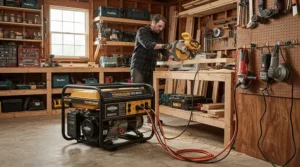
The UK grid is reliable, but “reliable” is an average. Figures drawn from Ofgem reporting work out at roughly 40 minutes of lost supply per household per year, yet that number hides the farmhouse that sat dark for two days after a storm. Ofgem’s guidance on planning for a power cut tells households to check how long any medical equipment’s backup battery lasts and to join their supplier’s Priority Services Register. A big, growable battery is the natural next layer of that plan.
Here is the honest bit. I haven’t lifted, plugged in or tested any of these units. This guide is built from manufacturer specifications, UK retailer listings and published third-party reviews, then interpreted for British homes: 230V sockets, grey Novembers and consumer units older than your sofa. Where a data point couldn’t be verified, I say so.
Inside you’ll find seven real models and a large capacity power station review of how they compare. You’ll also get a frank look at power station vs home battery storage, plus practical guidance on modular battery add-ons, solar integration and home energy resilience. Prices are indicative ranges only, so check current price before buying.
Quick Comparison: Seven Expandable Power Station Options at a Glance
| Product | Base capacity | Expands to | Continuous output | Best For |
|---|---|---|---|---|
| EcoFlow DELTA Pro 3 | 4,096Wh | 12kWh | 4,000W | One-box whole-day backup |
| Anker SOLIX F3000 | 3,072Wh | 12kWh (UK listing) | 3,600W | Easy handling, low idle drain |
| AFERIY P310 | 3,840Wh | 11,520Wh | 3,600W | Capacity per pound, long warranty |
| BLUETTI AC300 + B300 | 3,072Wh | 12,288Wh | 3,000W | Modular, build-it-yourself systems |
| BLUETTI Apex 300 | 2,764.8Wh | 58kWh | 3,840W | The longest growth path |
| Pecron F3000LFP | 3,072Wh | 10,752Wh | 3,600W | Budget-minded 3kWh buyers |
| Jackery Explorer 2000 Plus | 2,042Wh | 12kWh | 3,000W | Start small, grow later |
Read across the columns and a pattern jumps out. AFERIY P310 and Pecron F3000LFP chase the 3kWh-plus market on price, while EcoFlow DELTA Pro 3 and Anker SOLIX F3000 spend their premium on output, polish and ecosystem. BLUETTI Apex 300 is the odd one out: just under 3kWh to start, with the longest runway of the group. If you want a power station 3000Wh plus from day one, that narrows the field to five.
💬 Just one click — help others make better buying decisions too!😊
What Is an Expandable Power Station?
An expandable power station is a portable, mains-voltage battery unit with a built-in inverter that accepts extra battery modules, growing its stored energy from around 3kWh to 10kWh or more without replacing the core unit. Most recharge from the mains, solar panels or a vehicle, and run silently.
Two designs dominate. All-in-one units pack battery and inverter together and accept add-on packs through a dedicated port. That covers the EcoFlow DELTA Pro 3, Anker SOLIX F3000, AFERIY P310, Pecron F3000LFP and Jackery Explorer 2000 Plus. Split-architecture systems separate the brains from the cells. The BLUETTI AC300 has no battery inside at all and needs a B300 module to function, while the BLUETTI Apex 300 sits in between with a built-in battery plus modular growth.
Nearly all of these use lithium iron phosphate chemistry, which trades a little energy density for better thermal stability and a longer cycle life than older lithium-ion cells. That is why it has become the default for home-backup designs. Every expandable power station here is built on that chemistry, and the useful differences lie elsewhere: output, expansion ceiling, charging speed and warranty.
Top 7 Expandable Power Stations for UK Homes: Expert Analysis
Ordered roughly from premium to budget, with the start-small option last. Indicative price ranges cover the base unit only, and expansion packs cost extra.
1. EcoFlow DELTA Pro 3 — 4kWh flagship with real headroom
The headline is headroom: the EcoFlow DELTA Pro 3 opens at 4,096Wh and grows to 12kWh with two Smart Extra Batteries, a whole-day home-backup budget before you add anything.
On paper, 4,000W continuous (6,000W with X-Boost) means a kettle, washing machine and fridge-freezer can pull together without the inverter flinching. The 10ms UPS switchover is quick enough to keep a NAS or desktop alive through a blip. The 2,600W solar input, split across a 1,600W high-voltage port and a 1,000W low-voltage one, is the most generous in this group, which helps when British skies refuse to cooperate. The bill for all that muscle is 51.5kg, a two-person lift by any honest measure.
Based on the spec comparison, this suits households wanting one box for a full day of essentials with a route to multi-day cover. It is overkill for a weekend caravan. One UK buying guide warns that the brand’s expansion accessories are pricey and advises sizing the base unit right rather than planning to expand later. I couldn’t verify a stable aggregate rating for the UK listing, so read current reviews before committing.
Pros:
- ✅ Highest solar input in this group (2,600W)
- ✅ 4,000W output runs heavy appliances together
- ✅ 10ms UPS switchover protects sensitive kit
Cons:
- ❌ 51.5kg is a proper two-person lift
- ❌ Expansion batteries are pricey
Indicative price range: high-£2,000s to mid-£3,000s for the base unit; check current price. Premium money, justified only if you’ll genuinely use the 4kW output.

2. Anker SOLIX F3000 — suitcase handling, thrifty idle drain
The party trick is manners: the Anker SOLIX F3000 rolls like a suitcase and sips power when idle, with a UK listing claiming standby of up to five days.
The numbers are 3,072Wh, 3,600W at 230V and two solar inputs supporting up to 2,400W. The UK listing quotes expandable capacity of 3–12kWh, though some US-market coverage quotes 24kWh, so go by the UK listing. A time-of-use mode lets the unit charge when tariffs are cheap and discharge when they’re dear. That is quietly useful on a smart tariff, and an EV adapter can charge a car at up to 3,600W.
Here’s what to weigh: this is the pick for people who will move the unit around, from garage to kitchen to campsite, and who value low standby drain over headline output. The 20ms switchover is slower than the 10ms rivals, which only matters if your critical kit is fussy. Reviewers at The Solar Lab praised the platform for doing almost everything well and singled out the rolling-suitcase design as easier to move than most competitors.
Pros:
- ✅ Wheels and handle make it genuinely movable
- ✅ Low idle drain suits fridge duty
- ✅ Time-of-use charging for cheap-rate top-ups
Cons:
- ❌ 20ms UPS switchover trails faster rivals
- ❌ 12kWh UK ceiling trails the modular systems
Indicative price range: £2,000–£2,800; check current price. Fair for the polish, though not the cheapest per kWh.
3. AFERIY P310 — most capacity per pound, seven-year cover
Capacity per pound is the pitch: the AFERIY P310 offers 3,840Wh with a seven-year warranty listed on its UK page, and expands to 11,520Wh with up to two additional 3,840Wh packs.
The 3,600W inverter offers three 230V sockets among 13 outputs, and solar input reaches 2,000W. UPS switchover is under 10ms. The manufacturer is refreshingly candid about real-world losses: roughly 5% of charge is held in reserve, conversion runs at around 90%, and leaving the AC output on costs 20–25W around the clock. That idle draw is about half a kilowatt-hour a day, worth remembering during a long outage.
The spec sheet won’t tell you this, but reviewers at Portable Power Geek praise the value, sustained power delivery and comparatively light 40kg build for its size. The brand’s own UK store shows 4.93 out of 5 from 29 reviews, a small, brand-hosted sample, so treat it as encouraging rather than conclusive.
Pros:
- ✅ Seven-year warranty on the UK listing
- ✅ 11,520Wh ceiling at a competitive spec
- ✅ Under-10ms UPS with 2,000W solar input
Cons:
- ❌ 40kg still needs two people on stairs
- ❌ Idle draw with AC on is around 20–25W
Indicative price range: £1,500–£2,100; check current price. Strong value, especially if you’ll keep it for years.
4. BLUETTI AC300 + B300 — modular from the ground up
The stand-out feature is honesty of design: the BLUETTI AC300 is an inverter with no battery, so it only works once paired with a B300, and it accepts up to four of them.
Each B300 stores 3,072Wh, so a full stack reaches 12,288Wh behind a 3,000W inverter (6,000W surge). Solar input tops out at 2,400W, and combined AC-plus-solar charging can reach 5,400W, though that needs at least two B300 modules. Each B300 also works as a small standalone power station, with a 100W USB-C port and a 12V car port, so the system can split into pieces when you need it to.
This is the oldest design here, and it shows in the 3,000W ceiling, which is lower than newer 3.6–4kW rivals. In exchange, you get a mature ecosystem and cells rated for 3,500+ cycles to 80%. Owner comments on Bluetti’s own product pages are positive about modularity and reliability, but brand-hosted feedback is selective and independent UK coverage is thinner, so verify current reviews.
Pros:
- ✅ Each B300 module doubles as a standalone unit
- ✅ Up to 5,400W combined charging with two or more modules
- ✅ 3,500+ cycle rating to 80% capacity
Cons:
- ❌ BLUETTI AC300 does nothing without a B300
- ❌ 3,000W output trails newer designs
Indicative price range: £2,800–£4,000 for the inverter plus one battery; check current price. Worth it if modularity is the point; otherwise compare the newer BLUETTI Apex 300.
5. BLUETTI Apex 300 — 58kWh runway, just under 3kWh at launch
The longest growth path in this guide belongs to the BLUETTI Apex 300, which lists expansion to 58kWh using B300-series modules.
The base unit holds 2,764.8Wh, technically shy of the 3kWh line, but a single extra module takes it past 5.8kWh, so in practice it behaves like a power station 3000Wh plus. Output is 3,840W (7,680W peak), solar input is 2,400W, and UPS switchover is 20ms. Bluetti also lists a 5-year warranty through US dealers, so confirm UK terms. Manufacturer claims of 6,000+ cycles and a long service life are attractive, but they’re claims, not verdicts.
As a newer model, it doesn’t yet have the deep independent review record of older rivals. I couldn’t verify a robust sample of owner reviews, so treat the listing’s talk of weather alerts and ultra-low self-consumption as marketing until reviewers confirm it. On paper, this is the smartest choice for anyone expecting to add a heat pump or EV in the next few years.
Pros:
- ✅ Highest expansion ceiling here (58kWh listed)
- ✅ 3,840W output beats most 3kWh rivals
- ✅ 6,000+ cycle rating on the listing
Cons:
- ❌ Base capacity sits below 3kWh
- ❌ Limited independent review history
Indicative price range: £2,300–£3,300; check current price. Best judged as a platform, not just a box.

6. Pecron F3000LFP — budget 3kWh with a 10.7kWh ceiling
The budget hook is simple: the Pecron F3000LFP delivers 3,072Wh and 3,600W (4,500W surge for five seconds) at 28.7kg, the lightest 3kWh-class unit in this group.
Fast charging is a genuine strength: 1,800W from the mains fills it in roughly two hours, and combined AC-plus-solar input reaches 2,800W. Expansion goes to 9,216Wh with two EP3000-48V batteries or 10,752Wh with two EP3800-48V ones, but the cascade cable is sold separately, so budget for it. Solar input is around 1,600W per the manufacturer, and the box includes only a basic solar cable.
Reviewers at Battery Essence ran it through a simulated outage, powering a full-size fridge, a window AC unit and lights for over 18 hours. They also flagged the two-person lift, the extra cost of the optional cart and the large footprint. Independent budget guides likewise rate it as strong value for money. Since these are US-market specs, check that the UK listing shows 230V and the same figures.
Pros:
- ✅ Lightest 3kWh-class unit at 28.7kg
- ✅ Around two hours to charge from the mains
- ✅ Lowest price in this group
Cons:
- ❌ Expansion needs a separately sold cascade cable
- ❌ Solar input is the lowest of the 3kWh-plus group
Indicative price range: £1,000–£1,600; check current price. The value pick if you don’t need a premium ecosystem.
7. Jackery Explorer 2000 Plus — start small, grow to 12kWh
This is the grow-as-you-go choice: the Jackery Explorer 2000 Plus starts at 2,042Wh and, per Jackery’s UK guide, accepts up to five extra battery packs for a 12kWh total.
It is not a power station 3000Wh plus on its own, but one add-on pack pushes it comfortably past 4kWh. Output is 3,000W, and Jackery quotes 70% capacity retention after 4,000 cycles. Wall charging takes roughly 1.7 hours and solar around two hours under Jackery’s stated conditions. At 27.9kg it is heavier than a rival’s 21.6kg 2kWh unit, a trade-off for the bigger expansion path.
That combination suits buyers who want a sensible entry point without locking into a huge outlay. I couldn’t verify an aggregate review rating for the UK listing, and Jackery’s own UK guide positions its newer 3000 v2 as the stronger standalone option, so this one appeals mainly for its expansion path.
Pros:
- ✅ 3,000W output from a modest base
- ✅ Five-pack expansion up to 12kWh
- ✅ Around 1.7 hours wall charging
Cons:
- ❌ Base capacity is under 3kWh
- ❌ 27.9kg is heavy for 2kWh
Indicative price range: £1,400–£2,100 for the base unit; check current price. A gentle on-ramp, provided you budget for the add-ons.
| Product | Max solar input | UPS switchover | Indicative price range | Best For |
|---|---|---|---|---|
| EcoFlow DELTA Pro 3 | 2,600W | 10ms | High-£2,000s to mid-£3,000s | Whole-day backup, heavy loads |
| Anker SOLIX F3000 | 2,400W | 20ms | £2,000–£2,800 | Portable, low-idle fridge duty |
| AFERIY P310 | 2,000W | Under 10ms | £1,500–£2,100 | Big capacity, long warranty |
| BLUETTI AC300 + B300 | 2,400W | UPS modes; speed not verified | £2,800–£4,000 | Modular DIY systems |
| BLUETTI Apex 300 | 2,400W | 20ms | £2,300–£3,300 | Long-term growth |
| Pecron F3000LFP | Around 1,600W | 8–20ms | £1,000–£1,600 | Budget 3kWh |
| Jackery Explorer 2000 Plus | Not verified | UPS mode listed; speed not verified | £1,400–£2,100 | Grow-as-you-go |
The price column tells the story: the Pecron F3000LFP costs a fraction of what the EcoFlow DELTA Pro 3 does, and the extra money buys output, solar headroom and ecosystem rather than more stored energy. If you’re pairing panels, the solar column matters more than it looks, because a 1,600W cap means four 400W panels is your ceiling. Prices are indicative and move often, so check current price.
✨ Don’t Miss These Carefully Selected Picks!
🔍 Take your home backup to the next level with an expandable power station that grows alongside your needs. Click any highlighted product name to check current pricing and availability, then pick the size that suits your household today. ⚡
How to Choose an Expandable Power Station: 7 Steps That Matter
Choose by loads first, then capacity, output, expansion, charging, safety and weight, in that order. Here are the seven steps in full:
- Start with loads, not brands. Add up the wattage labels of what you must run. Continuous output must cover the total, with surge headroom for compressors.
- Pick a capacity tier. Assume roughly 85% of rated capacity is usable. If you need more than about 12 hours of essentials, a power station 3000Wh plus is the sensible starting tier.
- Check continuous versus surge output. Motors and fridges spike on start-up, so the surge figure protects you.
- Check the expansion ceiling and add-on price. Modular battery add-ons vary widely in cost per kWh, so compare before committing.
- Check charging inputs. Mains speed and solar input decide how quickly you recover, which is central to any solar integration plan.
- Check chemistry, certification and warranty. Look for LiFePO4 cells, UKCA or CE marking and clear warranty terms; claims here run from five to seven years.
- Check weight and placement. These units weigh 28.7kg to 51.5kg, so decide where yours will live before you buy.
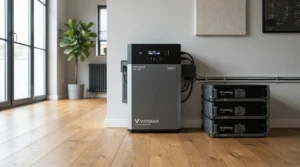
What to Expect from a Power Station 3000Wh Plus: Real-World Performance
A number on the box is not the energy you get out. Jackery’s own rule of thumb multiplies capacity by roughly 0.85 to allow for inverter, temperature and appliance losses, a sensible planning figure for any power station 3000Wh plus. The AFERIY P310 listing is franker still: 5% reserve, around 90% conversion efficiency and 20–25W of idle draw whenever the AC output is on.
Run the sums for a stripped-back 200W essentials load of fridge-freezer, router, LED lighting and a laptop. A modern fridge-freezer often averages just 40–60W across a day, although its compressor briefly draws several times that on start-up. On that basis:
- 3,072Wh × 0.85 ≈ 2,611Wh, or about 13 hours.
- 4,096Wh × 0.85 ≈ 3,482Wh, or about 17 hours.
- 12,288Wh × 0.85 ≈ 10,445Wh, or about 52 hours.
Now the reality check. UK electric showers commonly draw 7–10kW, which is beyond the continuous rating of a single unit here. A 3kW kettle sits right at the limit of a 3,000W inverter with anything else running. A power station 3000Wh plus is brilliant at keeping a household comfortable, not at replicating a normal day of heavy electricity use.
Modular Battery Add-Ons: How Expansion Actually Works
Modular battery add-ons are sold as simple stacking, but the details decide whether it stays simple. Add-ons connect through brand-specific cables and ports, so they don’t cross brands. Bluetti states the BLUETTI AC300 accepts only its B300-family modules, and the Pecron F3000LFP needs a separately sold cascade cable.
Ceilings differ enormously:
- EcoFlow DELTA Pro 3: two extra batteries reach 12kWh.
- AFERIY P310: two extra packs reach 11,520Wh.
- Pecron F3000LFP: two extra packs reach 10,752Wh.
- BLUETTI AC300 + B300: four batteries reach 12,288Wh.
- Jackery Explorer 2000 Plus: five packs reach 12kWh.
- BLUETTI Apex 300: modules reach 58kWh.
Price per kWh is the trap. One UK buying guide advises buying the right size up front because the expansion accessories for the EcoFlow DELTA Pro 3 are pricey. Compare the add-on price per kWh with the base unit, and confirm current-generation compatibility with the manufacturer before you buy. Every extra module also adds weight and footprint, so plan the space before the purchase, not after.
Power Station vs Home Battery Storage: Which One Earns Its Keep?
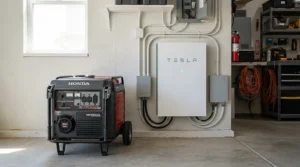
The power station vs home battery storage debate comes down to plumbing and purpose. A plug-in unit gives you portable backup for chosen appliances with no installer. A wired-in home battery, fitted alongside solar by a certified installer, covers the whole house automatically and can save money on time-of-use tariffs. The Energy Saving Trust explains that home batteries are usually paired with solar panels or a smart time-of-use tariff, storing surplus generation or cheap electricity for later.
On cost, Energy Saving Trust guidance has put an average installed 5kWh system at around £4,600, or roughly £900 per kWh. The units in this guide look cheaper per kWh, but they don’t switch the whole house automatically without a compliant changeover arrangement. Installer certification (MCS) typically matters for export payments under the Smart Export Guarantee, and reports suggest 0% VAT on installed solar and battery systems runs to 31 March 2027. As far as I can verify, that relief applies to installations rather than a unit you carry home, so check with HMRC.
| Factor | Petrol generator | Expandable power station | Installed home battery |
|---|---|---|---|
| Noise and fumes | Loud, outdoors only | Silent, fume-free | Silent |
| Fitting | None | Plug in; electrician for any changeover | Certified installer |
| Portability | Semi-portable | Yes (28.7–51.5kg) | No |
| Indicative outlay | Lowest upfront | £1,000–£4,000 base unit | Around £4,600 for 5kWh (EST) |
| Best for | Rare, long outages | Flexible backup and camping | Daily solar and tariff savings |
If your main goal is riding out occasional outages and taking power on the road, a power station wins. If you want daily savings from solar and tariffs, an installed battery does the job the plug-in units can’t.
Large Capacity Power Station Review: How the Field Stacks Up
This large capacity power station review is a synthesis of manufacturer specifications and published third-party coverage, not hands-on testing.
Where published reviews agree
Weight comes first: every 3kWh-plus unit here is a two-person job, from 28.7kg for the Pecron F3000LFP to 51.5kg for the EcoFlow DELTA Pro 3. LiFePO4 cells with 3,500–6,000+ cycle ratings are now standard. Reviewers also keep coming back to polish, with The Solar Lab singling out the Anker SOLIX F3000 for handling and reliability.
Where they diverge
UPS switchover splits the field: under 10ms for the EcoFlow DELTA Pro 3 and AFERIY P310, versus 20ms for the Anker SOLIX F3000 and BLUETTI Apex 300. That matters if a NAS or workstation is on the line. Warranty claims also differ, with the AFERIY P310 listing seven years against five for the Anker SOLIX F3000.
Then there’s the confusion over expansion figures. Anker’s UK listing quotes 12kWh where some US coverage quotes 24kWh, so always follow the listing for your market. Brand-hosted reviews, such as the AFERIY P310‘s 4.93 from 29, are worth reading but not the whole story.
Home Energy Resilience: Planning a UK Power-Cut Strategy
Home energy resilience is really a question of time: how many hours or days can you cover? Ofgem’s guidance points households with medical or other needs toward their Priority Services Register, and anyone can report a cut free by dialling 105. Rural households in storm-prone areas should plan for a 24-hour outage rather than a 4-hour one.
Tier your loads. Tier one is router, phones and lights, which barely dents a big battery. Tier two adds the fridge-freezer, plus the boiler: gas boilers still need electricity for pump and controls, typically 100–200W. Tier three is anything with an element, which is where an expandable power station reaches its limits.
Sizing the sums shows the trade-off. At 200W, a fully expanded 12kWh system covers about 52 hours; at 250W, about 42. That’s why modular battery add-ons matter for home energy resilience: you can start at 3kWh, cover most cuts, and grow toward multi-day protection as your budget allows. Keep the unit charged and in UPS mode, so it sits quietly between the wall and your router until it’s needed.
Solar Integration: Getting Panels and an Expandable Power Station to Cooperate
Solar integration is where an expandable power station stops being an emergency toy and becomes an energy asset. Input ceilings differ: 2,600W for the EcoFlow DELTA Pro 3, 2,400W for the Anker SOLIX F3000, BLUETTI AC300 + B300 and BLUETTI Apex 300, 2,000W for the AFERIY P310 and around 1,600W for the Pecron F3000LFP.
Voltage windows matter as much as watts. The EcoFlow DELTA Pro 3, for instance, splits input between a high-voltage port (30–150V, up to 1,600W) and a low-voltage one (11–60V, up to 1,000W), so check that your string voltage fits before wiring panels.
Now the British reality. A 3.5kWp UK system producing around 3,000kWh a year implies roughly 850kWh per kWp annually. A 1.6kWp array (four 400W panels) would therefore average about 3.8kWh a day, with summer well above and December far below. Mains-plus-solar charging is the answer for grey weeks, so a power station never strands you.
Rules for plug-in and balcony solar in Great Britain are still evolving, and British Gas has announced plans to sell plug-in kits while the Energy Saving Trust asks owners to register devices. Check current guidance before connecting anything to the grid. Feeding panels straight into a power station’s DC input avoids most of that complexity.

Long-Term Cost & Maintenance
Cycle life is the honest way to judge value. A 3kWh unit rated for 3,500 cycles to 80% delivers roughly 10,500kWh over its life. Cycled daily, that’s about 9.6 years, which lines up with the ten-year marketing claims. Warranties of five to seven years suggest manufacturers are reasonably confident.
Maintenance is light, but not zero:
- Keep firmware current through the app, since manufacturers push fixes and safety updates.
- Mind the temperature. The B300‘s spec sheet lists a charging range of 0–40°C, so don’t charge in an unheated garage during a freeze.
- Don’t leave the AC output on. Idle draw of 20–25W, as quoted for the AFERIY P310, quietly eats around half a kilowatt-hour a day.
- Store sensibly. Manufacturers commonly advise topping up periodically if a unit sits unused, so check your manual.
Add-on economics matter too. Buying a large base unit and never expanding wastes money, while under-buying and paying premium prices for add-ons wastes more. The sweet spot is a base unit sized for your realistic first-year needs, plus a compatibility check on the add-on you’d choose later.
Safety, Regulations & Compliance for UK Buyers
Batteries carry energy, and energy deserves respect. The government’s own domestic battery energy storage systems safety review concludes that every lithium chemistry can fail catastrophically and therefore needs active safety measures. LiFePO4 is more thermally stable, which helps, but it isn’t a licence to be casual. For fixed installations, PAS 63100:2024 now gives detailed guidance on residential battery installation.
Practical habits echo UK fire service advice:
- Charge on a hard, flat surface, away from soft furnishings and escape routes.
- Avoid leaving equipment charging unattended overnight where you can.
- Keep working smoke alarms on every floor.
- Follow the manual on ventilation and operating temperatures.
On compliance, buy units with UK-suitable 230V outputs and UKCA or CE marking. Anything connected to a consumer unit needs a qualified electrician working to BS 7671, ideally via a proper changeover or transfer arrangement. Never “back-feed” a house by plugging a power station into a wall socket, because it’s dangerous to you and to utility workers. If a listing quotes 120V outlets, it’s a US-market product, so check before you order.
Practical Usage Guide: Your First 30 Days
Most first-month mistakes come from skipping five simple steps:
- Day 1, charge and update. Give it a full charge from the mains, then update the firmware through the app.
- Day 2, measure your real loads. Plug a cheap energy meter between appliances and the unit, then write down actual wattages rather than guessing.
- Week 1, pull the plug. Run a mains-cut test to confirm UPS mode behaves as expected, with your router and workstation connected.
- Week 2, test the solar. Try your panels on a bright day and a dull one, and record real input figures.
- Day 30, set the routine. Decide when to top up, where it lives and who knows how to switch it on.
Avoid the classic first-month errors: leaving the AC output on constantly, charging in a freezing garage, and buying add-ons before you’ve measured your loads. A simple log of watts, hours and recharge times will beat any marketing figure.
Real-World Scenarios: Three UK Buyer Profiles
The rural storm-belt homeowner. Storms can bring 48-hour outages, and the essentials (fridge-freezer, boiler, router, lights) draw around 250W. At that load, a fully expanded 12kWh system covers about 42 hours. The EcoFlow DELTA Pro 3 with two add-on batteries fits, as does the BLUETTI AC300 + B300 with four modules. Budget: high, but you’re buying insurance.
The van or narrowboat couple. Space, weight and cost matter, and solar can work daily on the roof. The Pecron F3000LFP or AFERIY P310 delivers 3kWh-plus capacity at friendlier prices; both weigh well over 28kg, so plan where they’ll sit. Budget: £1,000–£2,100 for the base unit.
The home-worker with cheap overnight power. A smart tariff plus a workstation and NAS make the Anker SOLIX F3000 attractive for its time-of-use charging and low idle drain. If switchover speed is your priority, the AFERIY P310‘s under-10ms UPS is the better fit. Either way, a power station 3000Wh plus suits this profile.
Buyers expecting future growth, such as a heat pump or EV, should consider the BLUETTI Apex 300‘s runway or the Jackery Explorer 2000 Plus‘s gentler start.
Problem → Solution Guide: Five Common Headaches
“It’s too heavy to move.” Choose your unit’s permanent location before buying. A wheeled design like the Anker SOLIX F3000 helps, and the Pecron F3000LFP offers an optional cart.
“Winter solar barely tops it up.” Combine mains and solar charging, and treat the array as a supplement. Good solar integration in Britain means planning for the off-season.
“The battery drains with nothing plugged in.” Switch the AC output off when idle. The AFERIY P310 quotes 20–25W with it on, which adds up fast.
“The expansion cable doesn’t fit.” Buy only manufacturer-approved add-ons for your exact generation. The BLUETTI AC300 accepts only its own B300-family modules.
“Should I have bought a home battery instead?” Revisit the power station vs home battery storage comparison: if you want daily bill savings, an installed battery is the right tool, and the power station is your portable backup.
FAQ
❓ Can an expandable power station run a UK electric shower?
❓ How long does solar recharging take in a British winter?
❓ Can I mix expansion batteries from different brands?
❓ Is a power station 3000Wh plus worth it over a 1,000Wh unit?
❓ Do I need an electrician to connect one to my fuse box?
Conclusion
An expandable power station is the sensible answer to a question most households can’t yet answer: how much backup will I need in three years? Start with a base you can afford, then add capacity as your needs and budget grow.
If you want a single box that carries a full day of essentials, the EcoFlow DELTA Pro 3 is the flagship. The Anker SOLIX F3000 wins on handling and standby drain, while the AFERIY P310 offers the most capacity per pound. If you like building your system in modules, look at the BLUETTI AC300 + B300 or the longer-runway BLUETTI Apex 300. On a tighter budget, the Pecron F3000LFP and the Jackery Explorer 2000 Plus are sensible entry points.
Whichever you choose, remember what the large capacity power station review evidence says: size your loads honestly, check the expansion ceiling, and plan your solar integration for grey weather, not just sunny days. Weigh the power station vs home battery storage question against your actual goals. Do that, and you’ll have real home energy resilience rather than a heavy box in the garage.
Recommended for You
- Power Station For Camping Cooking: 7 Best Picks For UK Trips (2026)
- Power Station For Family Camping: 7 Best Picks (2026)
- Power Station For Medical Equipment Home Backup: 7 Best Picks (2026)
Disclaimer: This article contains affiliate links. As an Amazon Associate, I earn from qualifying purchases. If you purchase products through these links, we may earn a small commission at no additional cost to you.
✨ Found this helpful? Share it with your friends! 💬🤗
