In This Article
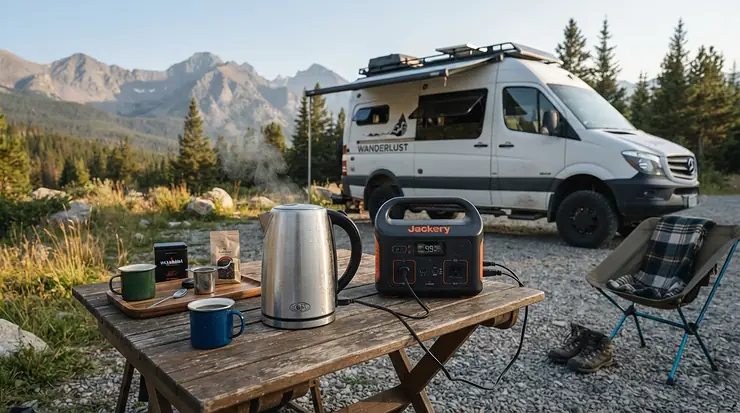
Somewhere around the third night of a family camping trip, the phones die, the fridge starts groaning, and someone’s tablet is down to 4% right when the film gets good. That’s usually the moment a power station for family camping stops being “nice to have” and starts being the thing holding the whole trip together. A power station for family camping is a rechargeable battery pack with built-in mains sockets, USB ports and a 12V output that lets you run lights, charge devices and keep a cool box or 12V fridge running without a noisy, fume-belching generator — you top it up from the mains, the car, or a solar panel, then carry it wherever the tent goes.
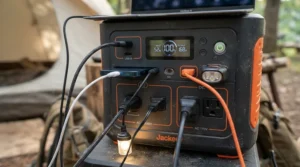
Unlike the single power bank you’d throw in a rucksack for a festival weekend, a genuine family setup has to survive a very different kind of chaos: four or five devices charging at once, a fridge running quietly through the night, rain that never quite stops, and kids who will absolutely knock it over at least once. It’s the same logic the British Red Cross recommends for home power cuts — keep essential devices charged before you need them — just applied to a tent instead of a house. Get the sizing wrong and you’re the family standing at the site shop at 9pm asking to borrow a socket. Get it right and camping starts to feel less like an endurance sport and more like an actual holiday.
This guide breaks down seven real power stations that cover everything from a weekend with the kids’ tablets to a full week off-grid with a fridge full of sausages, with honest analysis of what each one is actually good at — not just a spec sheet copied from the product page. We’ll also cover how port count, fridge power draw and runtime maths change depending on how many people, and appliances, you’re actually powering.
Quick Comparison Table: Power Stations for Family Camping at a Glance
| Power Station | Capacity | Continuous Output | Weight | Best For |
|---|---|---|---|---|
| Anker SOLIX C300 | 288Wh | 300W (600W surge) | ~4.1kg | Budget picks, kids’ devices, short trips |
| Jackery Explorer 500 v2 | 512Wh | 500W | 6.4kg | Lightest all-rounder for a weekend |
| EcoFlow RIVER 2 Pro | 768Wh | 800W (1,600W X-Boost) | 7.8kg | Weekend trips with a 12V fridge |
| EcoFlow DELTA 3 Classic | 1,024Wh | 1,800W (2,600W X-Boost) | 12.5kg | Fast-charging week-long trips |
| Jackery Explorer 1000 v2 | 1,070Wh | 1,500W (3,000W surge) | 10.8kg | Balanced power for a full family set-up |
| Bluetti AC180T | 1,433Wh (2 batteries) | 1,800W (2,700W lifting) | ~14kg+ | Hot-swap fridge power on the move |
| Bluetti AC200L | 2,048Wh (exp. to 8,192Wh) | 2,400W (3,600W lifting) | 28.3kg | Large family tents and basecamp set-ups |
Looking at the spread above, capacity roughly doubles every step up the list, but so does the weight you’re hauling from car to pitch — the jump from the Jackery Explorer 500 v2 at 6.4kg to the Bluetti AC200L at 28.3kg is the difference between “clips onto a rucksack” and “stays in the boot.” If you’re only running phones, a lamp and a speaker for a weekend, the smaller capacities are genuinely enough; it’s the fridge, the multiple devices, and the extra nights that push most families up a size or two. Continuous output matters as much as capacity here — a station can have a huge battery and still trip out if you try to run a kettle and a fridge compressor at the same time.
💬 Just one click — help others make better buying decisions too! 😊
Top 7 Power Stations for Family Camping: Expert Analysis
1. Anker SOLIX C300 — lightest budget pick for kids’ devices
At under 300W, the Anker SOLIX C300 isn’t trying to run your whole campsite — it’s built to be the family’s dependable phone-and-lamp battery that never runs out mid-trip. The 288Wh LiFePO4 battery and 300W continuous output (600W with Anker’s SurgePad) is enough for repeated phone and tablet charges, a laptop top-up, camp lighting and a small 12V cool box for a few hours — reviewers estimate roughly 20 full smartphone charges from a single charge. What it won’t do is run anything with a heating element or a compressor fridge overnight; a UK kettle draws around ten times its output ceiling. At 4.1kg with a shoulder strap, it’s genuinely something one of the kids could carry from car to pitch.
This is the right call for families whose “camping power” problem is really just four phones, a portable speaker and a head torch that all need juice by day two, not a full off-grid fridge setup. Reviewers and testers consistently position it as the sensible entry point rather than the workhorse — a family with a bigger appetite for power will outgrow it within a season. Reviewers on Amazon UK and dedicated tech outlets consistently praise its portability and quiet operation, with the recurring caveat that its 300W ceiling rules it out for anyone hoping to run a proper fridge or heater.
Pros:
- ✅ Genuinely light enough for kids to carry
- ✅ LiFePO4 cells rated for roughly a decade of use
- ✅ Pass-through charging doubles as a mini UPS
Cons:
- ❌ 300W ceiling rules out fridges and heaters
- ❌ Only two AC sockets limits simultaneous plug-in gear
Typically found in the low-to-mid £200s in the UK, the Anker SOLIX C300 is solid value if your family’s power demands stop at devices and lighting rather than refrigeration.

2. Jackery Explorer 500 v2 — lightest all-rounder for a weekend away
Jackery’s update to its most popular camping-sized unit shaves weight down to 6.4kg while keeping enough capacity for two full nights of family device charging. The 512Wh capacity and 500W continuous output cover phones, a lamp, a laptop and a portable speaker comfortably across a weekend, and the pure sine wave inverter means it’s safe for sensitive electronics like cameras and laptops. It won’t run a compressor fridge for long, but a genuinely thrifty 12V cool box can be squeezed in for a few hours a day.
For the family whose trips top out at two nights, this hits a sweet spot review sites keep landing on precisely because it’s light enough to be genuinely carried rather than just “portable” on a spec sheet — small enough to fit a rucksack’s front pocket, which matters when you’re also hauling a tent, sleeping bags and a cool box across a field. Independent testers repeatedly flag it as the standout lightweight camping pick in its price bracket, praising the LiFePO4 battery’s four-thousand-cycle rating; the main gripe is the 500W ceiling if you try anything more ambitious than device charging.
Pros:
- ✅ Lightest 500Wh-class unit widely reviewed
- ✅ Pure sine wave output, safe for laptops and cameras
- ✅ 4,000-cycle LFP battery built to last years
Cons:
- ❌ 500W continuous output limits fridge use
- ❌ No app connectivity on this model
Usually available in the £300-£400 range in the UK, the Jackery Explorer 500 v2 earns its keep as the grab-and-go option for families who prioritise weight over raw power.
3. EcoFlow RIVER 2 Pro — best mid-size for a weekend with the fridge on
Step up to 768Wh and 800W continuous output and a 12V camping fridge finally becomes a realistic overnight companion rather than a gamble. With X-Boost enabled, the RIVER 2 Pro can push output to 1,600W for short bursts — useful for a travel kettle or hairdryer, though a full-size UK kettle at 2,500W+ is still off the table. EcoFlow’s X-Stream charging gets it from flat to 80% in around 45-70 minutes, which matters if you’re topping it up at a motorway services or a campsite hookup before setting off. At 7.8kg it’s still carryable from car to pitch without a trolley.
Family campers running a genuine 12V compressor fridge — the kind that actually holds 4°C rather than just “cooler than outside” — tend to land here first, because 768Wh comfortably covers a fridge cycling at 40-60W plus phone and laptop charging for a weekend without babysitting the battery percentage. Reviewers note the fan can get noisy under heavier loads, which is worth knowing if you’re pitched close to other tents. Testers who ran it across multiple camping trips describe it as reliably powering a fridge, lights and device charging for two days straight, with the recurring complaint being fan noise at high output.
Pros:
- ✅ Genuinely powers a 12V fridge for a weekend
- ✅ 45-70 minute fast charge suits short pit-stops
- ✅ 5-year warranty matches EcoFlow’s premium tier
Cons:
- ❌ Fan noise increases noticeably under heavy load
- ❌ Not expandable if you need more capacity later
Typically priced in the mid-£500s in the UK, the EcoFlow RIVER 2 Pro is worth the jump over the smaller units the moment a fridge enters the packing list.
4. EcoFlow DELTA 3 Classic — fastest charge for a week-long trip
When you’re moving from pitch to pitch or only get an hour near a hookup, the DELTA 3 Classic’s headline trick — 0 to 80% in around 45 minutes — turns a lunch stop into a full recharge. The 1,024Wh capacity and 1,800W continuous output (2,600W via X-Boost) covers around 90% of typical household appliances, including laptops, a full-size fridge for stretches, CPAP machines and electric blankets — genuinely useful on colder nights with kids in the tent. At under 30dB it runs quietly enough not to become the pitch everyone complains about, and the LFP battery is rated for 3,000+ cycles.
This is the unit for families doing more than a weekend — a week at a campsite with hookup access, or several nights wild camping where you need a fridge running continuously rather than just overnight. The absence of a 12V car-style socket and any expansion battery option is the trade-off for that speed and portability, so anyone building a modular, growing setup should look at the Bluetti AC200L instead. Early UK reviewers highlight the 45-minute fast charge and quiet fan as the standout upgrades over the outgoing DELTA 2, while noting the shorter three-year warranty and missing 12V socket as the compromises that keep the price down.
Pros:
- ✅ 0-80% charge in around 45 minutes
- ✅ Under 30dB — genuinely quiet on a shared pitch
- ✅ 1,800W output covers most kitchen appliances
Cons:
- ❌ No 12V car-style socket included
- ❌ Cannot be expanded with extra battery packs
Sitting in the mid-£400s in the UK at launch pricing, the EcoFlow DELTA 3 Classic is a strong pick for week-long trips where charging speed matters more than expandability.
5. Jackery Explorer 1000 v2 — best balance of power and portability
A 2024/2025 redesign gave Jackery’s most popular mid-tier unit a genuine LiFePO4 upgrade, and the result is the most rounded all-purpose choice on this list for a full family set-up. The 1,070Wh capacity with 1,500W continuous output (3,000W surge) is enough to run a 1kW kettle, an air fryer or a coffee machine alongside fridge and device charging — testers report it handling a kettle, microwave and blender without tripping overload protection. The switch to LiFePO4 cells brings a genuine 4,000-cycle rating, and Emergency Charge mode gets it to full in around an hour from the mains.
Where the EcoFlow RIVER 2 Pro suits a fridge-and-devices weekend and the DELTA 3 Classic suits speed, this sits in between as the option built for families who want to cook properly at the pitch — coffee machine, toaster, the works — without carrying the near-30kg heft of the premium tier. At 10.8kg it’s heavier than the RIVER 2 Pro but still a one-person carry. UK reviewers consistently rank it among the best portable power stations tested, praising the quiet fan profile and fast charging, with the shorter three-year warranty flagged as the main letdown compared with EcoFlow’s five-year offer.
Pros:
- ✅ 1,500W output runs a kettle or air fryer
- ✅ LiFePO4 cells rated for roughly a decade
- ✅ 400W solar input keeps it topped up off-grid
Cons:
- ❌ Three-year warranty trails EcoFlow’s five years
- ❌ 10.8kg makes it a two-hands carry
UK pricing fluctuates widely with promotions, typically landing in the £400-£600 range, and the Jackery Explorer 1000 v2 earns its place as the do-it-all pick for families who cook as much as they charge.

6. Bluetti AC180T — hot-swap batteries power the fridge on their own
The AC180T’s party trick is genuinely unusual — its two 716Wh battery packs can be pulled out and slotted straight into Bluetti’s companion MultiCooler fridge, so the fridge keeps running even when it’s disconnected from the main unit. With both batteries fitted you get 1,433Wh total and 1,800W continuous output (2,700W in Power Lifting mode); with a single battery installed, output drops to 1,200W. The 45-minute fast charge and nine output ports mean multiple family members can charge devices while the fridge and lighting run independently.
This is the pick for a family whose camping trip genuinely revolves around food and drink staying cold — pop a charged battery into the MultiCooler, take it to the beach for the day, and swap it back in the evening. Reviewers who’ve tested the SwapSolar ecosystem describe it as a genuinely novel workflow rather than a gimmick, though it’s a heavier, pricier system than a family only charging devices needs. Tech reviewers who’ve run the AC180T alongside the MultiCooler consistently call the hot-swap feature one of the most useful innovations they’ve tested in this category, while noting the first-party battery lock-in and fairly high overall weight as trade-offs.
Pros:
- ✅ Hot-swappable batteries run the fridge independently
- ✅ 1,800W output covers most family camping needs
- ✅ Nine output ports for genuinely simultaneous charging
Cons:
- ❌ Proprietary batteries lock you into Bluetti’s ecosystem
- ❌ Considerably heavier once both batteries are fitted
The AC180T bundle sits at the premium end of this list, typically well over £1,000 with the MultiCooler included, making the Bluetti AC180T the choice for families who’ve decided cold food and drink is non-negotiable.
7. Bluetti AC200L — expandable powerhouse for a large family tent
For families pitching a bell tent or large canvas tent that’s basically a second living room, the AC200L’s 2,048Wh base capacity — expandable to a genuinely enormous 8,192Wh — is built to power the whole set-up at once. 2,400W continuous output (3,600W Power Lifting) runs a fridge, lighting, device charging and small cooking appliances simultaneously without the juggling act smaller units require, and four UK three-pin sockets plus a 12V car socket mean nobody’s queuing for a plug. At 28.3kg it’s firmly a “stays in the boot, runs a cable to the tent” unit rather than something you carry to a pitch.
This is overkill for a two-night family weekend, but for a week-long stay with a large family tent, multiple devices, a proper fridge and evening lighting all running together, it removes the daily anxiety about running out that smaller units create. The expandability is the real selling point — start with the base unit and add a battery module later if your camping habits grow. Reviewers consistently rate it highly for household-appliance-level output and smart charging modes, while flagging the sheer bulk and limited USB port selection as its weaker points for a portable-first buyer.
Pros:
- ✅ Expandable to 8,192Wh as needs grow
- ✅ 2,400W runs a fridge and appliances together
- ✅ Four UK sockets — no plug-swapping required
Cons:
- ❌ At 28.3kg, this is a car-boot unit, not a carry-to-pitch one
- ❌ Limited USB port selection for the price tier
Typically found in the £700-£900+ range in the UK depending on bundle, the Bluetti AC200L is the choice for families treating camping as basecamp living rather than roughing it.
✨ Don’t Miss These Exclusive Deals!
🔍 Take your family camping power set-up to the next level with these carefully selected picks. Click on any highlighted product to check current pricing and availability. These power stations will help you create authentic, hassle-free camping memories your family will love!
Setting Up Your Family Camping Power System
Getting a power station for family camping right starts before you’ve even left the drive. Charge it to 100% the night before you leave — most LiFePO4 units, including every model on this list, are safe to store at full charge for the two or three days a typical trip lasts, unlike older lithium-ion cells that degrade faster near 100%. On arrival, position the unit somewhere dry, shaded and ventilated; direct sun on a hot day can push internal temperatures up and trigger the fan to run constantly, draining capacity faster than the appliances plugged into it.
Plan your port allocation before the trip starts, not when someone’s phone is already at 2%. With four family members, a fridge and camp lighting all competing for sockets, work out which sockets are “always on” (fridge, router if you’re bringing one) and which rotate between phones and tablets. A cheap USB power strip plugged into one AC socket effectively multiplies your charging ports without adding load. Most UK sites also expect noise kept to a minimum after 11pm, per the Camping and Caravanning Club’s good camping guide, so a quiet unit matters for more than just your own tent.
The most common first-trip mistake is running the fridge and a kettle or hairdryer simultaneously on a mid-capacity unit — the combined draw trips the overload protection, which feels like a fault but is the battery correctly protecting itself. Stagger high-draw appliances instead of running them together. Finally, top up via solar during the day whenever you can; even a modest 100-200W panel meaningfully extends how long you can go before needing a mains recharge, and it’s the only way to genuinely go off-grid for a full week.
Real Family Camping Scenarios: Matching the Right Power Station to Your Trip
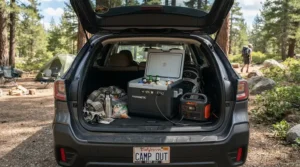
The Websters, two adults and two teenagers, camp three or four weekends a summer at a campsite with electric hookup nearby but not on their actual pitch. Their power needs are almost entirely device charging, a lamp, and a portable speaker — the Jackery Explorer 500 v2 or Anker SOLIX C300 covers this comfortably, and the lighter weight matters when they’re also carrying a family-sized tent and cool box from the car park.
The Ahmeds take one longer week-long trip a year to a coastal site in Cornwall, running a proper 12V compressor fridge for fresh food, charging two kids’ tablets constantly, and cooking basic meals at the pitch. This is squarely EcoFlow RIVER 2 Pro or Jackery Explorer 1000 v2 territory — enough continuous output to run the fridge and a kettle without conflict, with capacity to spare across several days between charges.
The Patels camp off-grid for a week at a time with a large canvas tent that functions as their whole living space, running lighting, a fridge, device charging and the occasional slow cooker meal all at once. For that kind of sustained, simultaneous demand, the Bluetti AC200L‘s expandable capacity and four-socket output remove the guesswork; a smaller unit would mean constant power juggling. Matching the scenario to the unit — rather than buying the biggest one “to be safe” — is usually the difference between a power station earning its keep and one gathering dust in the garage the rest of the year.
How to Choose a Power Station for Family Camping
Choosing the right power station for family camping comes down to matching capacity and output to what you’ll actually run, not chasing the biggest number on the box. Here’s how to work through it:
- Count your must-run appliances first. List everything that needs to run simultaneously — fridge, lights, router — and add their wattages together; that total is your minimum continuous output requirement, not your battery capacity.
- Size capacity to trip length, not household habits. A weekend needs roughly 500-800Wh for a family of four; a week-long trip with a fridge running continuously pushes that to 1,000-2,000Wh depending on solar top-up availability.
- Check port count against family size. Four people plus a fridge plus a laptop is five or six devices wanting power at once — a unit with only two AC sockets forces constant unplugging and renegotiating.
- Weigh portability against your actual carry distance. A 28kg unit is fine if it’s staying in the car boot with a cable running to the tent; it’s a non-starter if you’re walking half a mile from a car park to a pitch.
- Prioritise LiFePO4 battery chemistry. Every unit on this list uses it for good reason — it tolerates the repeated partial charging typical of camping far better than older lithium-ion cells, and lasts years longer.
- Factor in charge speed if you’re touring multiple sites. A 45-minute fast charge, like the EcoFlow DELTA 3 Classic offers, matters far more if you’re moving pitch every few days than if you’re staying put for a week.
- Decide whether expandability is worth paying for now. If your camping ambitions are likely to grow, an expandable system like the Bluetti AC200L avoids buying twice.
Power Stations for a Large Family Tent: Sizing Capacity to Your Set-Up
A large family tent changes the maths considerably compared with a two-person dome. Where a small tent might need a single lamp and a couple of phone chargers, a genuine family-sized tent — the kind with a separate sleeping pod and a living area — tends to run several lights simultaneously, a fridge, multiple devices, and sometimes a small fan or heater on cooler nights. That’s a meaningfully higher and more sustained draw than the weekend-device scenario most budget units are built around.
For this use case, continuous output matters more than raw capacity: a large tent running lighting across two rooms plus a fridge compressor cycling on and off needs headroom to avoid nuisance trips, which is why the 1,500W-2,400W tier — the Jackery Explorer 1000 v2, EcoFlow DELTA 3 Classic or Bluetti AC200L — suits large tents better than the sub-800W units, even on trips where total energy use per day isn’t enormous. Socket count also becomes a genuine practical issue rather than a minor inconvenience once you’re powering a whole living space rather than a single sleeping area; four sockets, like those on the Bluetti AC200L, avoids the daisy-chaining of extension leads that trips people up in a tent full of gear and kids in the dark.
Camping Fridge Power Draw Explained
A 12V camping fridge typically draws 30-60 watts while its compressor is actively running, but because the compressor cycles on and off rather than running continuously, real-world daily consumption is usually lower than that peak figure suggests. Independent testing from camping and overlanding communities puts a 40-45 litre fridge in ECO mode at around 240-400 watt-hours per day, while a larger 60-litre unit in hot weather can climb to 500-600Wh per day.
That distinction matters when sizing a power station: a fridge rated at 60W doesn’t use 60Wh every hour, because the compressor is typically only running 40-70% of the time once the target temperature is reached. Doing the maths properly — daily fridge consumption plus phone and tablet charging plus lighting — is far more useful than eyeballing a battery’s total Wh figure and hoping for the best. As a rough planning rule, a 500-800Wh unit like the EcoFlow RIVER 2 Pro comfortably covers one day of fridge use with charging headroom left over, while a week-long trip without solar top-up realistically needs the 1,000Wh-plus tier — the Jackery Explorer 1000 v2, EcoFlow DELTA 3 Classic or larger. Ambient heat is the biggest hidden variable here: a fridge working harder to hold temperature on a 28°C afternoon will draw noticeably more than the same unit on a cool, overcast one.
Multiple Simultaneous Charging Ports: Why Port Count Matters for Families
It’s easy to focus entirely on watt-hours and continuous output and forget that a family of four generates a genuinely surprising number of things wanting power at once — two or three phones, a tablet each for the kids, a camera, a portable speaker, and a laptop for anyone working remotely. A power station with only two USB ports and a single AC socket turns into a nightly queue, and queuing for a charger is a fast track to a tent full of grumpy children.
This is where the mid-to-premium tier genuinely earns its keep: the Bluetti AC180T‘s nine output ports and the Bluetti AC200L‘s four UK three-pin sockets plus multiple USB-A and USB-C outputs mean the whole family can charge devices simultaneously without unplugging anyone else’s gear. Budget units like the Anker SOLIX C300 compensate reasonably well with a mix of USB-A, USB-C and a car socket despite having only two AC outlets, which is fine for a family whose devices are mostly USB-charged rather than needing mains sockets. A cheap multi-socket extension plugged into one AC output is a simple workaround if you’re stuck with a lower-port-count unit, though it’s worth checking the extension’s own load rating before plugging in anything power-hungry.

Family Trip Runtime: How Long a Power Station Actually Lasts on a Week-Long Camping Trip
Runtime for a genuine week-long family trip depends almost entirely on daily consumption versus battery capacity, and the numbers add up faster than most people expect. A family running a 12V fridge (roughly 300-500Wh/day), charging four devices daily (perhaps 100-150Wh combined), and running a lamp each evening (another 50-100Wh) is looking at a realistic daily total somewhere around 450-750Wh. Against that, a 768Wh unit like the EcoFlow RIVER 2 Pro covers roughly one day before needing a recharge, while the 1,024-2,048Wh tier stretches to two or three days between charges.
For a genuinely off-grid week with no mains hookup, the maths only really works with either a much larger battery — the Bluetti AC200L‘s 2,048Wh base, or its expanded 8,192Wh configuration — or a mid-size unit paired with solar input to offset daily use. A 200W solar panel in decent UK summer sun can realistically contribute 400-800Wh across a full day, which is enough to cover a fridge’s daily draw on its own in good conditions, turning a week-long trip from constant battery anxiety into something closer to self-sufficient. Families staying at sites with hookup access have an easier route: a fast-charging unit like the EcoFlow DELTA 3 Classic, which reaches 80% in around 45 minutes, can top up during a single evening’s connection rather than needing an overnight charge.
Power Station vs Petrol Generator for Family Camping
The obvious alternative to a battery power station is a small petrol generator, and for years that was the default answer for family campers wanting real power off-grid. The comparison isn’t close on most of the factors that actually matter for a family trip, though petrol generators do still win on one: raw runtime, since you can simply carry more fuel rather than waiting to recharge.
| Factor | Power Station | Petrol Generator |
|---|---|---|
| Noise | Near-silent to ~30-50dB | Loud, disturbs neighbouring pitches |
| Fumes | None | Carbon monoxide risk, needs outdoor use |
| Campsite rules | Generally welcomed | Often banned or restricted to set hours |
| Refuelling | Mains, car or solar | Requires carrying and storing petrol |
| Best For | Weekend to week-long family trips | Extended off-grid trips needing constant high power |
The Camping and Caravanning Club’s own advice on campsite electricity notes that generator use is generally at the discretion of the site steward and must be positioned downwind due to carbon monoxide risk — a restriction that simply doesn’t apply to a battery power station. For a family trying to avoid disturbing neighbouring pitches or falling foul of a site’s generator ban, a power station like the EcoFlow DELTA 3 Classic at under 30dB removes the problem entirely, while still covering most of what a small generator would run.
Common Mistakes When Buying a Power Station for Family Camping
The single most common mistake is buying based on the loudest headline number — usually watt-hours — without checking continuous output against what you actually plan to run. A 1,000Wh unit with only 500W continuous output will still trip if you try to run a kettle and a fridge together, regardless of how much total energy is stored inside it.
The second mistake is underestimating fridge draw specifically, treating a 12V compressor fridge like a simple, constant load rather than a compressor that cycles and works harder in hot weather — see the fridge power draw section above for the real numbers. Third, families frequently buy for the “big trip” scenario and then find the unit is too heavy and unwieldy for the far more common weekend outing, when a lighter secondary unit like the Anker SOLIX C300 would have covered 80% of their actual camping.
Finally, plenty of buyers skip checking port count entirely and only realise the problem once four people are trying to charge devices from a unit with two USB ports. Reading the actual port list — not just the headline capacity — before buying avoids most of the frustration reported in aggregated review sentiment across every product in this guide.
Long-Term Cost & Maintenance
A LiFePO4 power station is a genuinely long-term purchase rather than a disposable gadget, which changes the value calculation considerably. Every unit on this list is rated for 3,000-4,000+ charge cycles before meaningful capacity loss, which at even a generous twenty camping trips a year works out to well over a decade of use — a very different proposition from the 500-cycle lithium-ion units that dominated this category just a few years ago.
| Tier | Capacity Range | Price Range | Best For |
|---|---|---|---|
| Budget | 250-550Wh | Under £400 | Single overnight to weekend device charging |
| Mid-range | 750-1,100Wh | £400-£650 | Weekend to week-long trips with a fridge |
| Premium | 1,400Wh+ | £700+ | Week-long, large tent, or basecamp use |
Cost per use drops dramatically once you look past the upfront price: a mid-range unit used for ten years of summer camping works out to a few pounds per trip, comparable to or cheaper than a season of disposable battery packs and gas canisters for lighting and device charging. Maintenance is minimal — avoid storing any unit at 100% charge for months at a time (80% is the general recommendation for long-term storage), keep it dry, and don’t leave it charging unattended for extended periods, which is standard advice for any lithium battery rather than something specific to camping. The main long-term cost to budget for is a replacement solar panel or cable if you’re pairing the unit with solar input, since these connectors see more wear from repeated packing and unpacking than the power station itself.
Safety, Regulations and Campsite Rules Guide
Lithium batteries are broadly very safe when used as intended, but they’re still high-energy devices worth respecting, particularly around children on a campsite. The core rules are straightforward: never charge a unit inside a sealed tent overnight without ventilation, keep it away from direct heat sources like a camp stove, and stop using it immediately if you notice swelling, unusual heat or a burning smell. The London Fire Brigade’s guidance on lithium batteries notes that failures can ignite quickly and produce intense, fast-spreading fires — rare with a reputable LiFePO4 unit, but worth knowing before packing one next to sleeping bags.
Every product in this guide uses LiFePO4 chemistry specifically because it’s markedly more thermally stable than the lithium-ion cells found in cheaper alternatives, which is part of why UK safety guidance treats it as a lower-risk category. On the campsite-rules side, most UK sites are actively supportive of power stations precisely because they’re quiet and fume-free compared with petrol generators, and every unit in this guide comfortably clears typical quiet-hours expectations. If you’re topping up via a site’s electric hookup, check the site’s specific rules first, since some sites restrict what can be plugged into shared bollards.

FAQ
❓ What size power station do I need for family camping?
❓ Can a power station run a fridge all night while camping?
❓ Are power stations for family camping allowed on UK campsites?
❓ How many devices can charge at once on a family camping power station?
❓ Is it worth buying an expandable power station for camping with kids?
Conclusion
There’s no single best power station for family camping — there’s only the right one for how your family actually camps, and hopefully the breakdown above makes that decision considerably easier than scrolling through spec sheets on Amazon. If your trips are occasional weekends built around devices and lighting, the Anker SOLIX C300 or Jackery Explorer 500 v2 will do the job without you carrying dead weight for capacity you’ll never use. Families running a genuine fridge for a weekend sit comfortably with the EcoFlow RIVER 2 Pro, while the Jackery Explorer 1000 v2 and EcoFlow DELTA 3 Classic cover the middle ground of week-long trips and proper cooking at the pitch.
For anything approaching basecamp living — a large family tent, several devices, a fridge and lighting all running together for a week or more — the Bluetti AC200L‘s expandable capacity and four-socket output remove the daily power anxiety that smaller units create, and the Bluetti AC180T‘s hot-swap batteries solve the very specific problem of keeping food cold away from the main unit. Whichever tier fits, the underlying maths is the same: add up what you’ll actually run, check continuous output against your heaviest simultaneous load, and buy capacity for your typical trip rather than your one ambitious once-a-year adventure. Get that right, and the next camping trip’s power drama is the one thing you won’t have to think about.
Recommended for You
- Power Station For Medical Equipment Home Backup: 7 Best Picks (2026)
- Power Station For Whole House Backup: 7 Best UK Picks (2026)
- Power Station vs Generator For Home Backup: 7 Best Picks (2026)
Disclaimer: This article contains affiliate links. As an Amazon Associate, I earn from qualifying purchases. If you purchase products through these links, we may earn a small commission at no additional cost to you.
✨ Found this helpful? Share it with your friends! 💬🤗
